

Bridging Model and Silicon: Co-Design for Efficient AI Inference
Dr Tulika Mitra, Provost'S Chair Professor, School of Computing
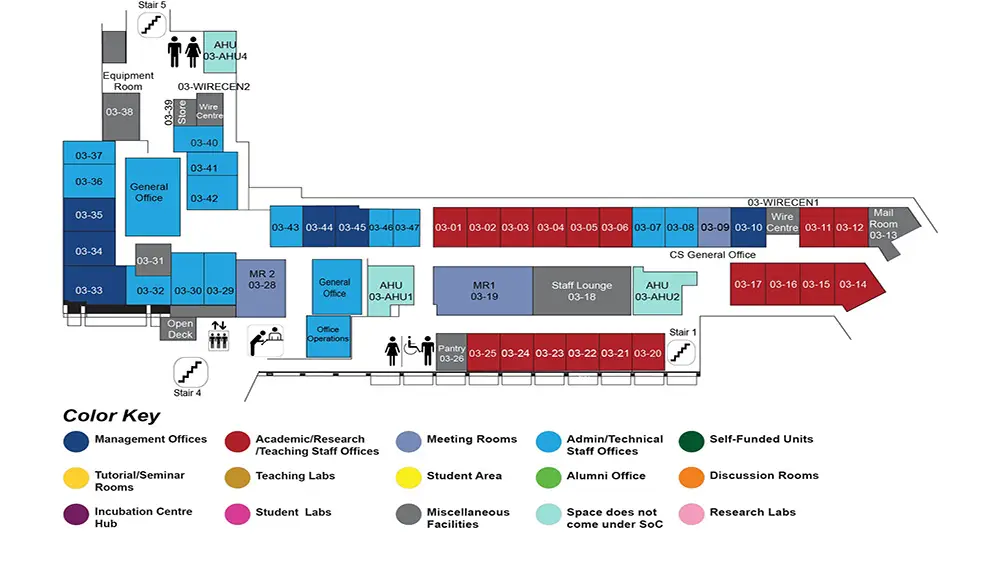
COM1 Level 3
MR1, COM1-03-19
Abstract:
AI inference runs everywhere now, from wearables to datacenter fleets, all under tight latency and power budgets. Each layer of the system stack has been designed independently, so every layer leaves efficiency behind for the next one to deal with. It starts at the algorithm level, where quantization only optimizes for accuracy and stays agnostic to the circuit characteristics of the hardware it runs on. One level down, the compiler is no different, scheduling operations one at a time and leaving the timing slack across pipeline stages unused. Below that, the hardware doesn’t make up for it either, since architectures are built for dense compute and struggle with the irregular sparsity that compresses models best. And once the chip is finally deployed, heavy use in the racks builds up faults that get it discarded early, adding to the reliability and sustainability challenges. The only way forward is to co-design these layers together.
My work addresses this across the entire stack, but in this talk I’ll focus on three contributions. HALO, at the algorithm level, brings circuit-level timing directly into post-training quantization, finding better efficiency operating points on existing accelerators with no hardware changes. COMPOSE carries the same idea one level down to the compiler, chaining several operations into a single clock cycle to harvest the timing slack that conventional mappers leave behind. Nexus Machine, at the architecture level, is a reconfigurable architecture that supports irregular sparsity patterns through an Active Message-inspired execution model, where compute units expose their availability to the network so idle compute can absorb work through decentralized, message-driven scheduling. Together they show that co-designing these layers unlocks efficiency that no single layer achieves alone. And this goes beyond simulation, with two generations of taped-out chips implementing parts of this stack into silicon.