

Towards Reliable and Creative Generative Models: Securing Boundaries and Expanding Frontiers
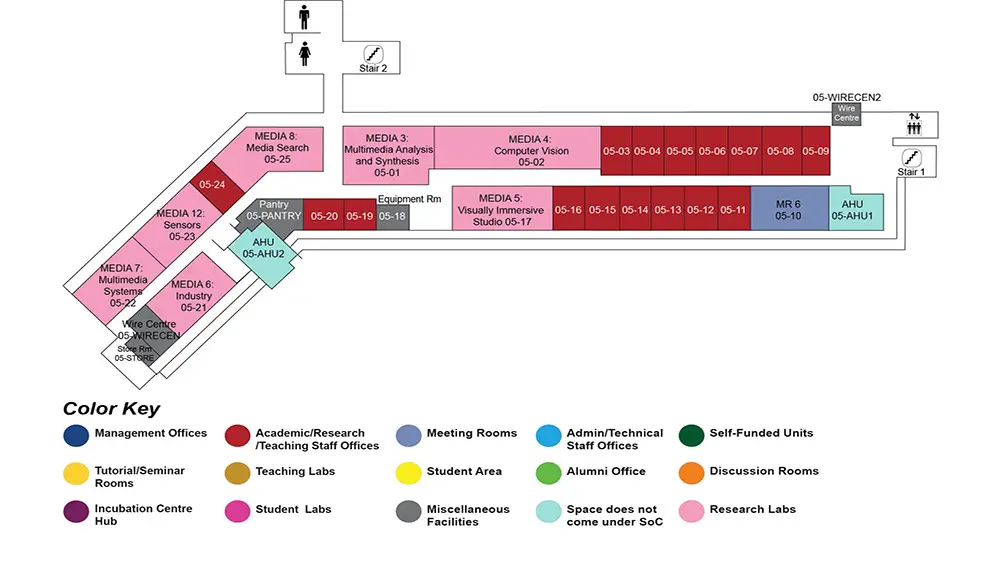
AS6 Level 5
MR6, AS6-05-10
Abstract:
Text-to-image generative models have achieved remarkable success in synthesizing high-fidelity visual content, but their practical deployment remains constrained by two closely related challenges: reliability and creativity. On the one hand, these models tend to memorize training data and generate copyright-infringing or harmful content, raising concerns about whether they can operate within secure boundaries. On the other hand, they often suffer from limited diversity, producing repetitive or stereotyped outputs despite their stochastic formulation. This thesis argues that the sustainable development of generative AI requires a dual focus on securing boundaries and expanding frontiers.
Firstly, we study the vulnerability of probabilistic copyright protection in generative models. While such methods provide theoretical guarantees for individual generations, they often overlook the fact that malicious users may interact with a model repeatedly and adaptively. This thesis develops an amplification attack framework showing that sustained interaction can substantially increase the probability of copyright-infringing generation, thereby exposing a gap between theoretical protection claims and realistic deployment settings.
Secondly, we investigate post-hoc undesired data removal through machine unlearning. Since retraining modern generative models from scratch is often computationally infeasible, approximate unlearning provides a more practical alternative for removing harmful or undesirable content after training. To address the limitation that existing methods largely ignore the varying forgetting difficulty of individual data points, this thesis proposes an adaptive unlearning strategy that uses the model's own loss as an implicit signal of forgetting difficulty, enabling more effective and efficient concept removal while preserving model utility.
Finally, we explore how to expand generative creativity. Existing training-free diversity methods mainly manipulate the sampling trajectory, while largely assuming that standard Gaussian initialization is sufficient. In contrast, this thesis shows that initialization itself is a critical factor for diverse image generation, and proposes a diversity-inducing initialization method that samples from a guidance potential posterior to steer generation toward diversity-rich regions of the latent space.
Collectively, these contributions establish a coherent framework for building generative models that are both reliable in respecting boundaries and creative in exploring their valid frontiers.