

From Wayfinding to Collaboration: Developing a Real-World Robotic Guide Dog for People with Visual Impairments
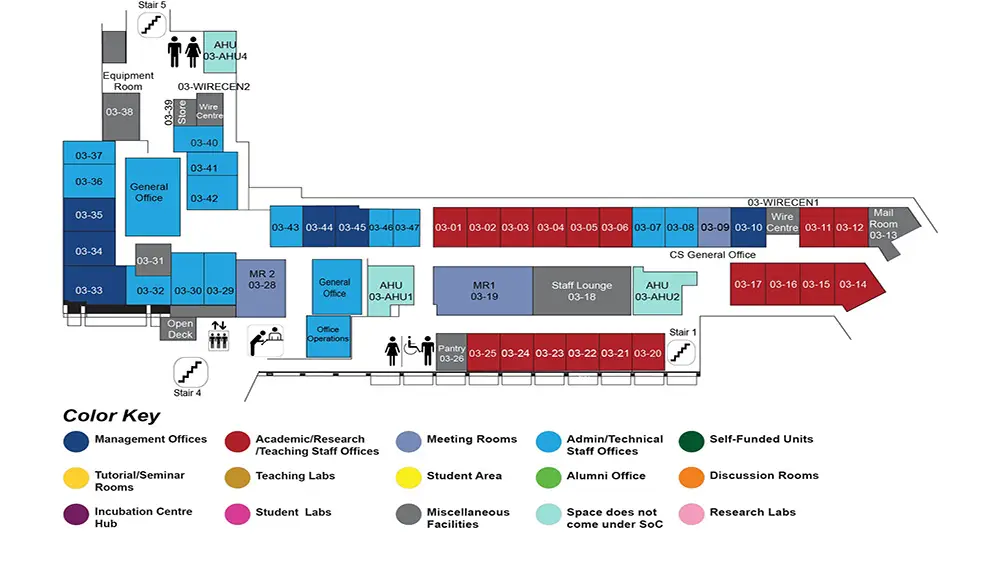
COM1 Level 3
MR1, COM1-03-19
Abstract:
According to the World Health Organization (WHO), there are approximately 290 million blind and visually impaired (BVI) individuals worldwide, including 43 million who are completely blind. About 90% require assistance to leave their homes, and those who travel independently typically rely on a few familiar routes. Traditional mobility aids such as white canes have limitations in complex and unfamiliar environments, while guide dogs—though effective—are scarce and costly to train. Robotic guiding systems offer a promising alternative; however, most existing research remains confined to controlled laboratory settings, lacking the robust navigation and interaction design and real-world validation necessary for practical deployment in complex indoor and outdoor environments.
This thesis presents a quadrupedal robotic guide dog system that supports the wayfinding, obstacle avoidance, and environmental interaction needs of visually impaired individuals in complex indoor and outdoor environments. Adopting a user-centered design methodology, this work makes several key contributions.
First, it introduces a foundational system architecture, developed through participatory design with BVI users, that integrates intuitive kinesthetic guidance with multimodal feedback, and a user-aware wayfinding framework based on hierarchical maps to deliver location-based preemptive cues. Experimental results demonstrate that the robotic guide dog significantly improves navigation efficiency and safety while reducing workload compared to traditional mobility aids, maintaining high usability and trust.
Second, it proposes a dual-mode collaboration framework that combines the complementary capabilities of humans and robots, enabling them to jointly accomplish complex environmental interaction tasks such as taking elevators, passing through doors, and locating and accessing seating. User studies show that this collaborative framework achieves high success rates, enhances task efficiency, and reduces physical effort compared to a baseline system and traditional mobility aids.
Finally, this thesis presents a longitudinal case study involving repeated real-world deployments of the robotic guide dog in everyday mobility contexts. The study examines how the system supports navigation across familiar and unfamiliar environments, how users adapt to robotic guidance through repeated use, and how trust, reliance, and customization needs evolve over time. The findings highlight the potential of robotic guide dogs to expand independent mobility while revealing important design considerations for shared control, environmental awareness, and personalization in real-world deployment.
Collectively, this work advances robotic guidance from controlled laboratory settings toward practical, human-centered assistive companions for everyday navigation.