

Safe Quadrupedal Locomotion against High-Speed Dynamic Obstacles: Reflexive Evasion, Active Perception, and Hierarchical Planning
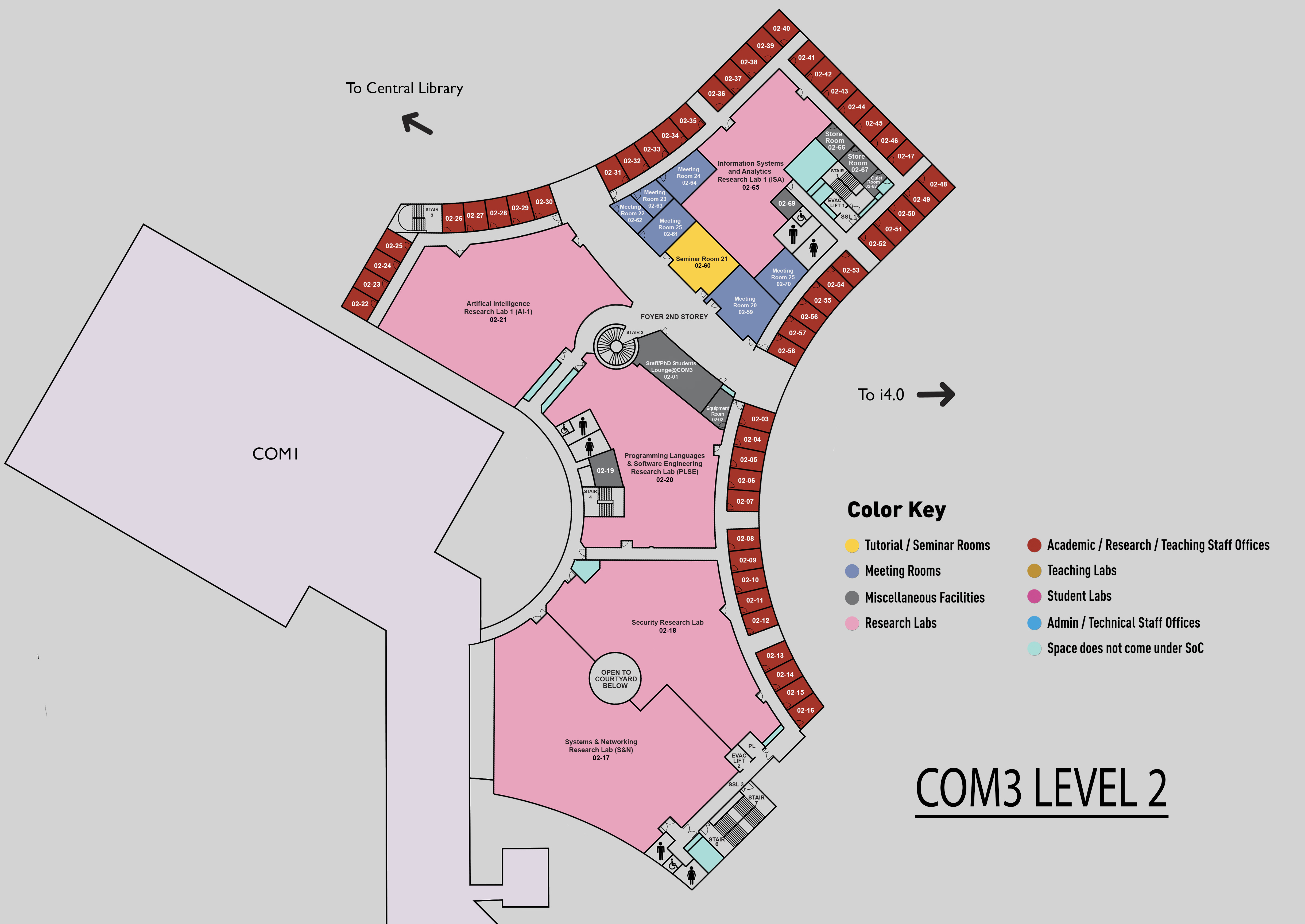
COM3 Level 2
MR21, COM3 02-61
Abstract:
Locomotion safety is critical for quadruped robots operating around humans and moving objects, especially when they must react to high-speed dynamic obstacles under limited reaction time. In practice, safe deployment is constrained by three challenges: rapid and stable evasive locomotion, reliable onboard perception with sufficient coverage and timely attention to critical threats, and sustained goal-directed mobility over uneven terrain and static constraints while remaining responsive to urgent hazards. This thesis addresses these challenges through a progressive framework spanning reflexive locomotion, active perception, and hierarchical planning.
We first present REBot, a locomotion framework for instantaneous dynamic obstacle avoidance under limited reaction time. REBot combines fast reflexive evasion with post-avoidance stabilization, enabling the robot to react quickly to imminent threats while recovering robustly after aggressive maneuvers. This establishes the locomotion foundation for safety in situations where delayed replanning is no longer sufficient.
Building on this foundation, we introduce APREBot, an active perception system for dynamic environments with omnidirectional threats. APREBot combines global sensing for continuous situational awareness with selective refinement of the most critical target, allowing the robot to identify, assess, and respond to threats in a timely manner using fully onboard perception. This improves both safety and efficiency in dynamic settings.
Finally, we propose UEREBot, a hierarchical framework for quadruped navigation in unstructured environments under high-speed dynamic obstacles. UEREBot separates long-horizon guidance from instantaneous reflexive evasion and coordinates them during execution through a threat-aware handoff and a control barrier function shield. The spatial-temporal planner provides reference guidance, obstacle prediction, and threat-related information, enabling the robot to preserve goal-directed mobility over uneven terrain and around static obstacles while maintaining low-latency responses to urgent dynamic threats.
Together, these contributions form a unified stack for quadrupedal locomotion under high-speed dynamic obstacles, integrating reflexive evasion, onboard perception, and hierarchical planning within a unified control pipeline. This thesis offers a practical perspective on coordinating decision making across time scales for safer quadruped deployment in dynamic, human-populated environments.