

Data selection and provenance for machine learning systems
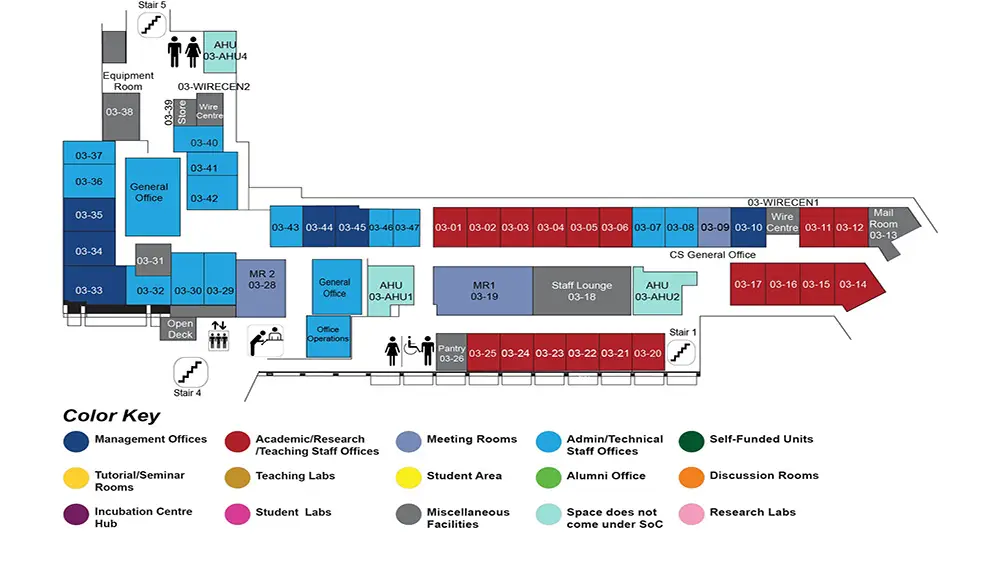
COM1 Level 3
MR1, COM1-03-19
Abstract:
Recent progress in artificial intelligence has largely been driven by research focused on innovations in model architecture and optimization while usually treating data as exogenous to the problem. Together with the scaling up of model size, computation, and data, these advances have enabled machine learning systems to achieve impressive performance in benchmarks and demonstrate successes in challenging tasks. However, challenges around data decisions have increasingly emerged as critical bottlenecks to progress and practical deployment of AI systems. For example, scientific data may be scarce and heterogeneous, making data selection important for achieving desired model performance. Beyond performance, foundation models are trained on massive but often opaque datasets, creating data provenance concerns around veracity, intellectual property, and privacy that increasingly complicate practical deployment.
These challenges motivate a basic question: how does data impact model behavior? This thesis investigates this question through two complementary perspectives on the data-model relationship. Prospectively, data selection studies how training or inference inputs are selected to achieve desired model performance under resource constraints. Retrospectively, data provenance studies how signals can be embedded into data so that its potential use in model training and attempted removal via unlearning can subsequently be evaluated from model output. Together, these perspectives treat decisions about data as key programmatic components of machine learning systems.
The prospective part of the thesis develops three methods for data selection at different points in the data-model lifecycle. PINNACLE considers adaptive selection of heterogeneous experimental and collocation points during physics-informed neural network (PINN) training. Based on analysis of PINN training dynamics via the empirical Neural Tangent Kernel, it results in major PINN performance improvements over a wide range of PDE settings. PIED considers the complementary one-shot setting where experimental designs must be decided before data can be collected. It uses PINNs as both forward simulators and inverse solvers within a fully differentiable ensemble architecture, enabling gradient-based optimization of continuous experimental design variables, such as sensor configurations, for PDE inverse problems. DIPPER considers inference-time prompt selection, where it optimizes for a set of diverse and high-fidelity reasoning prompts to form an LLM ensemble from a single small base language model to achieve improved performance.
The retrospective part of the thesis develops two methods for active data provenance. Waterfall introduces a robust and scalable text watermarking framework that embeds signals into text data while preserving its semantic content. These signals are designed to remain detectable after text transformations and use in downstream LLM training, supporting data provenance evaluations for text data ranging from natural language to programming code. Building on this capability, WaterDrum develops a data-centric framework for evaluating LLM unlearning. It measures watermark evidence associated with a designated forget set after attempted unlearning and produces a calibrated, continuous metric of unlearning progress.
Across these five contributions, data selection exploits structure already available in the domain, task, learning process, or model responses to improve specified task outcomes, while data provenance introduces controlled structure into data with the purpose of subsequent auditability while preserving task-relevant fidelity. Together, they contribute towards principled and practical foundations for using data decisions to improve the performance and accountability of machine learning systems.