

Cognitive Alignment in Human-AI Interaction
COM1 Level 3
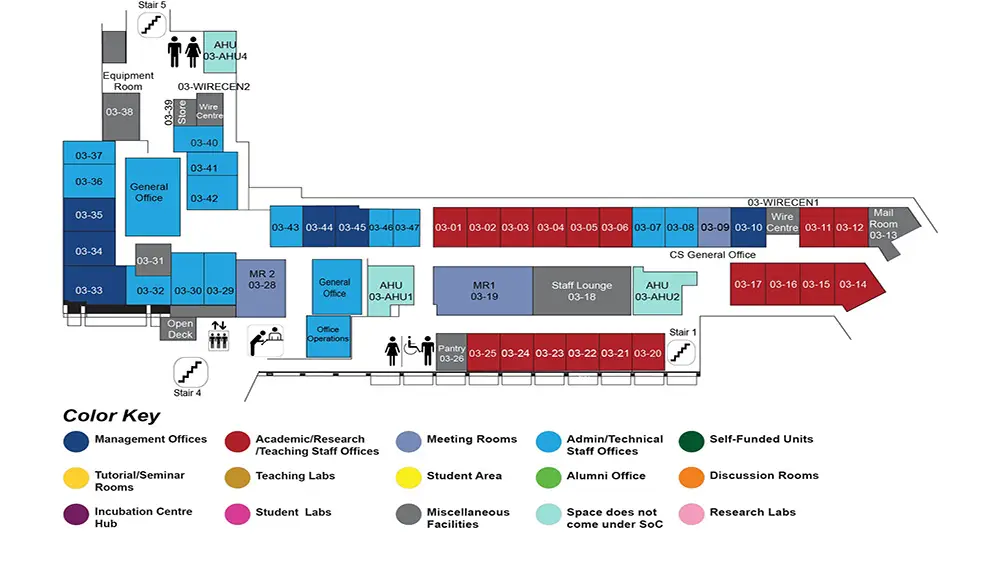
MR1, COM1-03-19
Abstract:
How people understand and evaluate themselves influences their choices, actions, and well-being. These ways of thinking about oneself, referred to as self-related cognition, include beliefs about one's characteristics and identity, i.e., self-concept, and evaluations of one's abilities, i.e., self-confidence. In conversation and collaboration, people may adjust how they understand their own characteristics and evaluate their abilities in response to their partners' expressed characteristics and confidence, gradually converging in self-related cognition. As AI becomes a partner in everyday conversation and collaboration, expressing personality and confidence, similar influences may arise in human-AI interaction, leading users' cognition to align with AI-expressed characteristics.
This thesis investigates human cognitive alignment with AI, the tendency for users' self-related cognition to converge toward AI-expressed characteristics. Combining randomized behavioral experiments, user modeling, and intervention evaluation, it examines alignment's conditions, consequences, dynamics, and use in interaction design.
First, we examine how interacting with AI changes people's understanding of themselves and the consequences of these changes. A mixed-design experiment combined random assignment to conversation-topic conditions with pre- and post-conversation measurements. Participants discussed personal or non-personal topics with a chatbot using GPT-4o's default personality setting. In the personal-topic condition, their personality-related self-concepts aligned with the chatbot's measured traits and became more similar to one another. Stronger alignment was associated with greater conversation enjoyment.
Second, we turn to how people evaluate their abilities, examining changes in self-confidence during AI collaboration and their consequences for decision making. A mixed-design experiment varied collaboration paradigms and correctness feedback. In an income prediction task, participants reported their judgments and self-confidence across independent, collaborative, and subsequent independent stages. Self-confidence aligned with AI confidence, and the alignment persisted into subsequent independent decisions. Correctness feedback moderated alignment. Alignment could improve or worsen self-confidence calibration, the match between confidence and actual accuracy, and affect collaborative decision accuracy.
Third, we explore how to understand and regulate alignment to leverage its benefits and reduce its risks. Focusing on confidence alignment, a randomized experiment using income prediction tasks varied the similarity of human and AI confidence displays and the overall level of AI confidence. Alignment was stronger with displays more similar to human self-confidence reporting. We fitted a mixed-effects user model describing how previously observed AI confidence influences subsequent self-confidence. We formulated improving calibration as an optimization problem and used this objective to develop task-order and AI confidence display interventions, evaluated separately and together in another randomized experiment. Compared with random task order, the task-order intervention reduced self-confidence calibration error and improved collaborative decision accuracy.
Together, these works show that alignment with AI can shape how people understand and evaluate themselves. They provide empirical evidence about alignment, its conditions, and its consequences across interaction contexts. The user model provides a reusable method for future research to quantify and predict alignment dynamics. The formulation shows how the user model can guide interventions to improve self-confidence calibration and collaborative decision accuracy. These contributions provide a foundation for designing AI systems that leverage alignment's benefits while addressing risks to users' self-related cognition.