

Rethinking Expectations under Network Effects
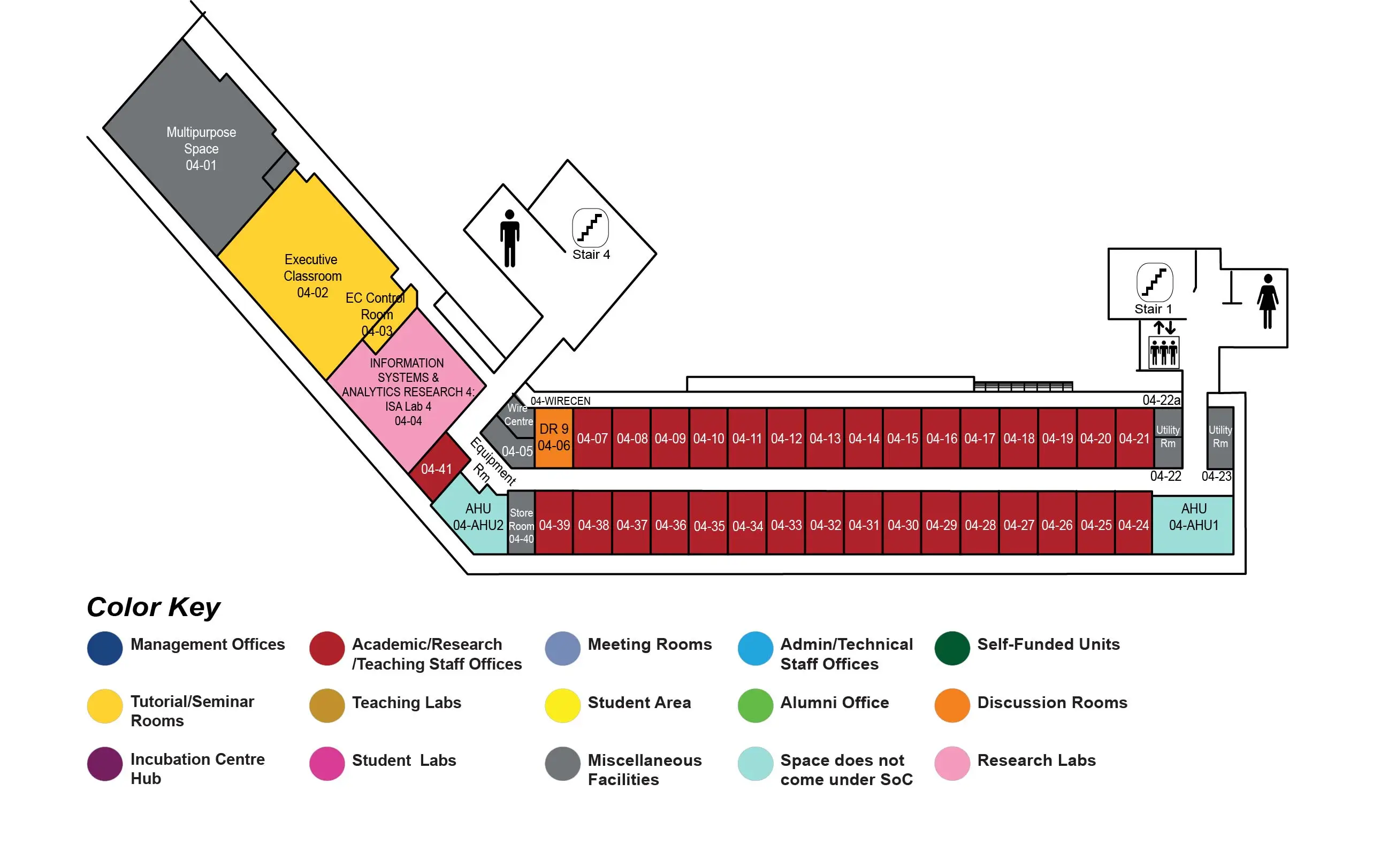
COM2 Level 4
Executive Classroom, COM2-04-02
Abstract:
Many products are valuable only if others use them, from messaging apps and online games to connected vehicles. In these markets, a user's decision hinges on what she/he expects everyone else to do, and those others are reasoning about her in turn. The economic literature has long resolved this user interdependency with the fulfilled-expectation equilibrium, which requires beliefs about network size to match realized outcomes, and this concept underlies a large body of prior works on pricing, piracy, freemium, and disclosure. However, FEE takes beliefs as given without explaining how they form in real world. This talk presents two studies that test it in very different settings. In laboratory experiments, human subjects whose expectations follow cognitive hierarchy and anchoring-and-adjustment show a "rotation-to-middle" bias. They underestimate network size at low prices and overestimate it at high prices. The bias grows with network strength, and social learning reduces it without eliminating it. In the second study, LLM agents play a repeated game with network-like complementarities. Their apparent gains from in-context learning vanish once the statistical pattern of the history is broken, and the loss is larger under stronger interdependence. Collectively, our evidence from two contexts reveal a three-way gap: While economic theory assumes consistent beliefs, humans hold biased but partly corrigible ones, and LLM agents may only mimic patterns.
Bio:
Dr. Yifan Dou is a professor of information systems and business intelligence at Fudan University. He obtained both his bachelor's and doctoral degrees from the School of Economics and Management, Tsinghua University. His research interests cover e-commerce, digital platforms, and the economics of digital goods and services. He is currently an associate editor for Management Science and Information Systems Research.