

Resource-Rational Modeling Of Human Reading
COM1 Level 3
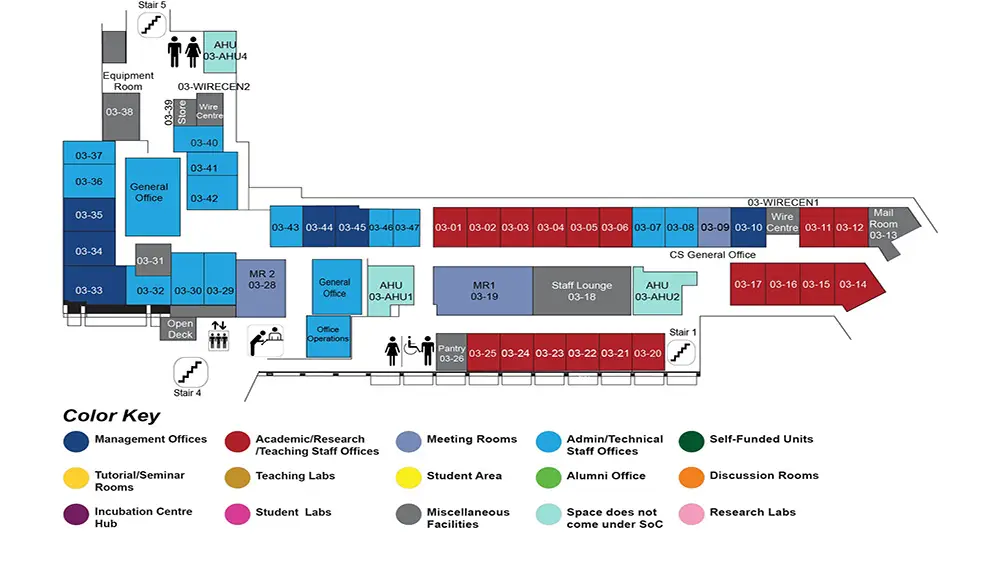
MR1, COM1-03-19
Abstract:
Reading is a fundamental human activity through which people learn, communicate, acquire knowledge, and interact with an increasingly information-rich world. Yet successful reading depends not only on language knowledge, but also on moment-to-moment behavior: readers must continually decide where to look, what to skip, when to reread, and how long to continue processing. These decisions determine what information becomes available for comprehension and become especially consequential when attention, memory, or time is limited. Modeling reading as behavior is therefore important both for understanding how people adaptively coordinate their cognitive resources and for designing technologies that support reading across different users, tasks, and environments. Decades of empirical research have identified systematic patterns in fixation durations, skipping, regressions, and comprehension, as well as their variation with lexical, sentence-level, and text-level factors. However, a central computational gap remains: existing theories often explain either eye-movement control or comprehension, without fully accounting for how they are jointly coordinated toward a reader’s goals.
This thesis proposes that reading can be understood as hierarchical resource-rational control. The central idea is that readers operate with limited visual, cognitive, memory, and temporal resources and therefore adaptively allocate eye movements to maximize comprehension while minimizing effort and time costs. Rather than treating fixations, skips, regressions, and rereading as fixed responses to linguistic features, the thesis models them as goal-directed actions selected according to their expected value for comprehension. Reading is thus characterized as active information sampling: eye movements determine what information is acquired, while the reader’s evolving understanding determines where to look next.
This account is instantiated in a hierarchical computational model spanning three interacting levels. At the word level, the model selects fixation locations to reduce uncertainty about word identity. At the sentence level, it decides whether to continue, skip, or regress to support sentence integration. At the text level, it decides whether to proceed or reread earlier material to construct and maintain coherent comprehension. Each level is formalized as a partially observable sequential decision-making problem and implemented using deep reinforcement learning, allowing reading policies to emerge through optimization under resource constraints rather than from manually prescribed behavioral rules.
The thesis combines theoretical development, computational modeling, controlled simulation, and empirical evaluation. The model is compared with established findings from published eye-tracking and comprehension studies, as well as data from a new experiment on reading under time pressure. Across these evaluations, it reproduces a broad range of phenomena, including lexical effects on fixation duration, preferred fixation locations, word skipping, regressions triggered by processing difficulty and ambiguity, text-level rereading, comprehension outcomes, and adaptations to limited reading time. Ablation studies further identify the roles of hierarchical control, memory limitations, and sensitivity to long-term comprehension value. Additional modeling studies extend the framework to reading while walking with optical head-mounted displays, individual differences among readers, and simulation-based optimization of augmented reading interfaces.
Overall, this thesis provides a unified computational account of reading as adaptive information sampling for comprehension under bounded resources. It connects cognitive theory, behavioral and eye-tracking evidence, computational simulation, and technology design, offering both an explanation of how reading behavior emerges and a methodological foundation for predicting and supporting reading across users and contexts.