

Deep Learning for Translational Cancer Genomics: VAE Frameworks to Align Cancer Models and Enhance Risk Prediction
Dr Anders Jacobsen Skanderup, Adjunct Associate Professor, School of Computing
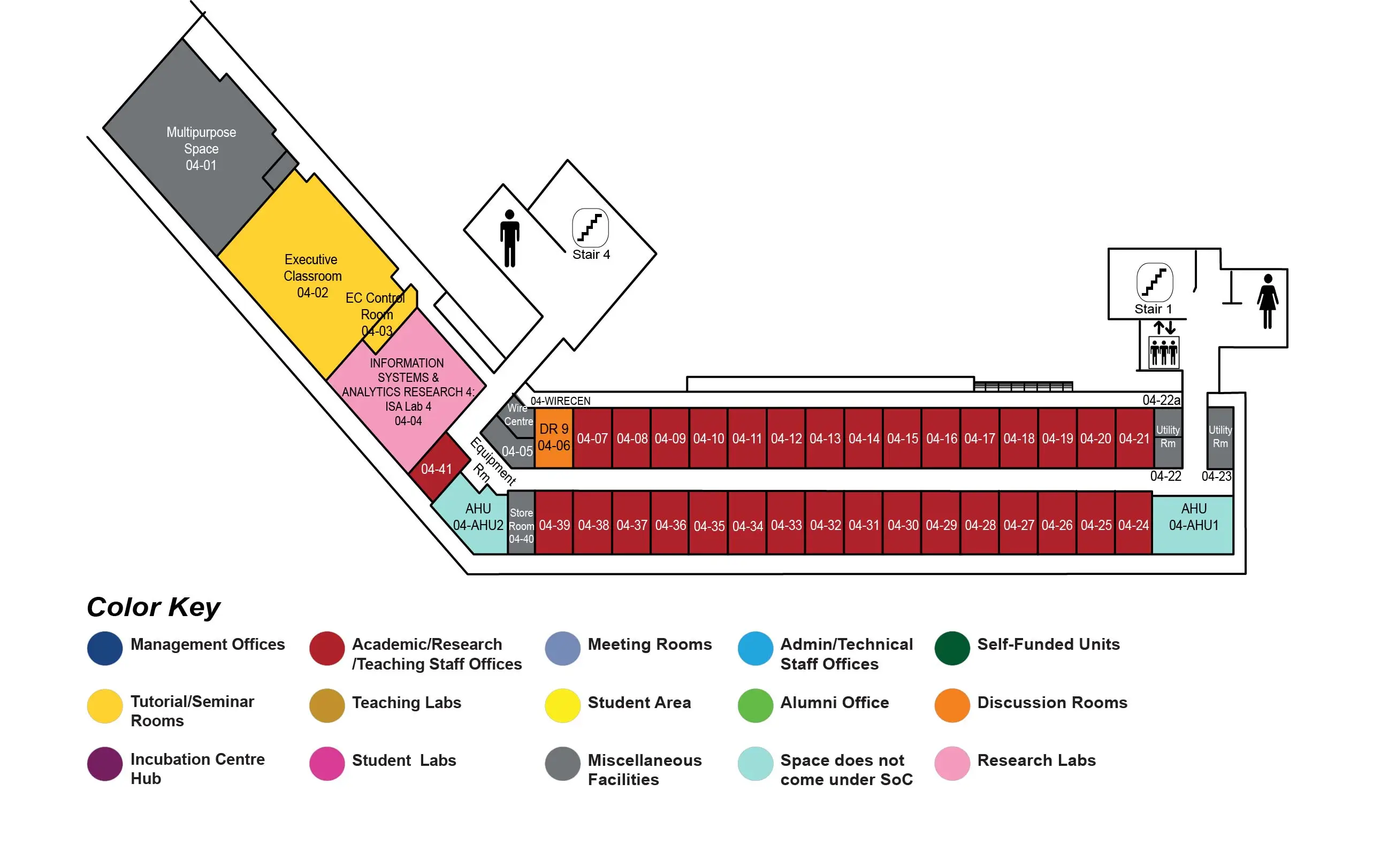
COM2 Level 4
Executive Classroom, COM2-04-02
Abstract:
Precision oncology heavily relies on high-throughput transcriptomics to uncover molecular mechanisms that underline tumorigenesis and therapeutic response. However, the integration of datasets is challenging due to high-dimensionality, batch effects, and significant disparities between preclinical models (such as lab-grown cell lines) and patient tumors.
Deep generative models, specifically Conditional Variational Autoencoders (CVAEs), promise to model such complex and non-linear relationships, but current implementations lack an explicit way to control information flow between latent variables and conditional inputs. This results in latent-class entanglement where confounding factors are mixed with biological signals, leading to impaired generative quality by way of over or under-correcting.
This thesis proposes a novel regularized CVAE framework designed for explicit conditional disentanglement of latent representations. By separating biological signals from pre-specified clinical or technical factors, this research aims to generate robust and interpretable features from transcriptomic data for downstream translational applications.
First, we introduce two complementary regularizations to the CVAE objective – a distance correlation penalty to enforce latent conditional independence, and a gradient-based penalty to increase network sensitivity to conditional inputs. Empirical validation on MNIST and gene expression datasets show significant improvements in conditional generation accuracy and class disentanglement compared to the standard CVAE implementation.
Secondly, the framework is applied on a large, complex, multi-cohort Lung Adenocarcinoma dataset. It successfully disentangles the patient ancestry and driver mutation status from the latent space. This latent representation is shown to retain not just biological information, but also preserves prognostic value – competing with a state-of-the-art gene panel in modeling patient recurrence risk.
Third, this thesis presents RNAlign, which integrates two large-scale pan-cancer datasets comprising tumor and cell line transcriptomes. Benchmarking reveals that while other methods trade off between batch removal and bio-conservation, RNAlign successfully balances both objectives. As a result, RNAlign performs best in a downstream CL-tumor transfer task predicting gene dependency.
Altogether, this research prescribes a principled approach to regularization and implementations of CVAE to better integrate heterogeneous cancer transcriptomic dataset. Effective disentanglement of biological signals from confounding factors enhances the predictive utility of preclinical models.