

MACHINE LEARNING ON A TIGHT BUDGET
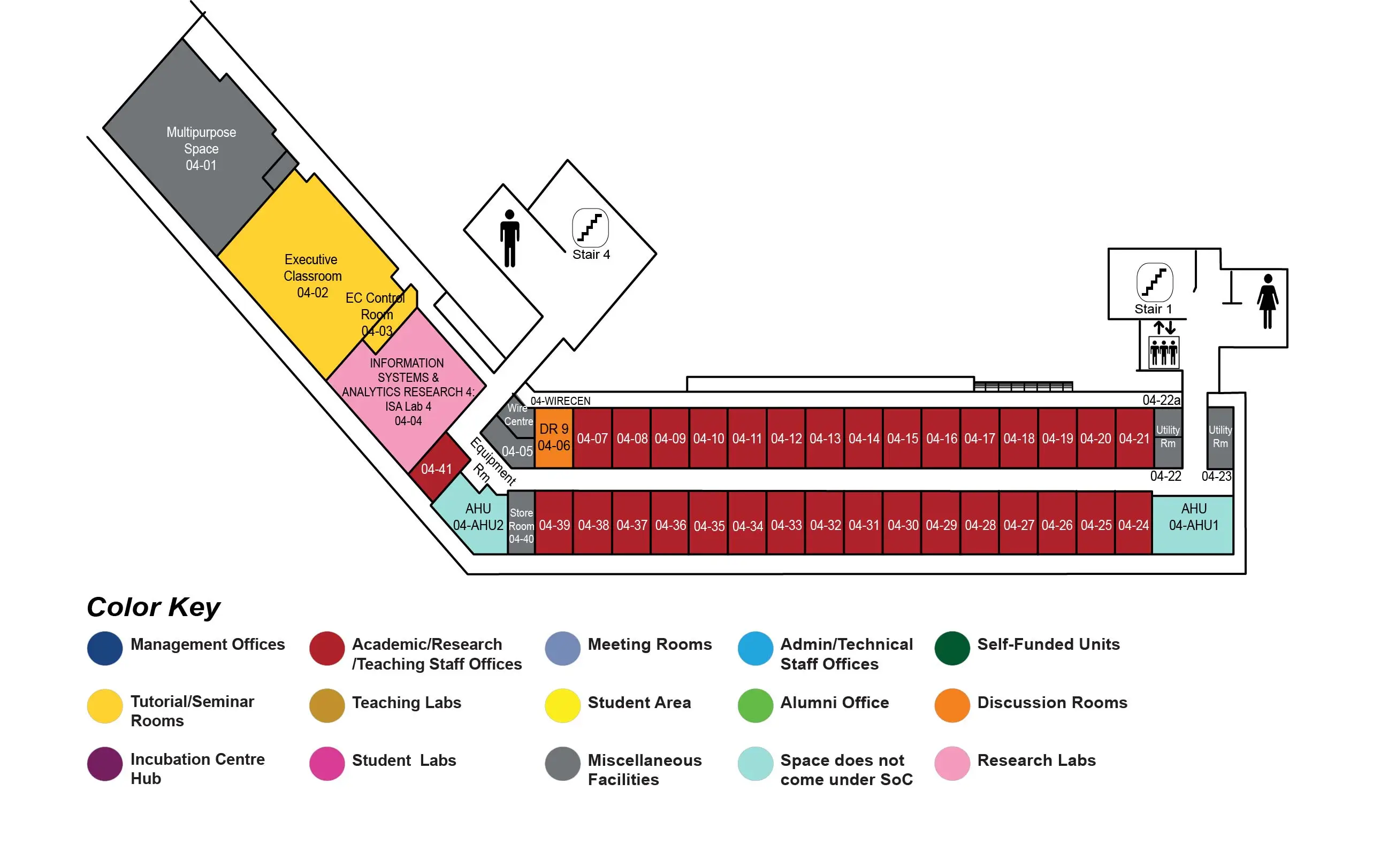
COM2 Level 4
Executive Classroom, COM2-04-02
Abstract:
Unlabeled data are often easy to obtain, while labels can be expensive and therefore harder to acquire. Active learning addresses this gap by selecting the most valuable examples for annotation. I will briefly review our work showing that the optimal selection strategy depends critically on the annotation budget: coverage and typicality are preferable when labels are scarce, while uncertainty becomes effective as the model matures.
I will then describe recent directions that build on this insight. First, in semi-supervised learning, we address the extreme cold-start regime by replacing unreliable model confidence with probabilistic label beliefs inferred directly from the geometry of a self-supervised representation. Second, for active learning across the full range of budgets, we introduce a label-free measure of representation maturity that identifies when learned features become reliable, allowing a single coverage-based strategy to adapt its geometry as learning progresses. Finally, we extend low-budget active learning to federated settings.
Bio:
Daphna Weinshall is a Professor of Computer Science at the Hebrew University of Jerusalem. She received her B.Sc. in Mathematics and Computer Science and her M.Sc. and holds her Ph.D. in Statistics (Population Genetics). She has served as an Area Chair for leading conferences, including NeurIPS, CVPR, ICCV, ECCV, and IJCAI, and as a member of the editorial board of IEEE Transactions on Pattern Analysis and Machine Intelligence (PAMI). She has also served on panels for major grant evaluation committees, including the European Research Council (ERC). She has held visiting positions at NYU, MIT, and Harvard, and has been a visiting researcher at IBM, NECI, and Philips Research Labs. Her research addresses fundamental challenges in artificial intelligence and machine learning, with an emphasis on data efficiency, adaptivity, and robustness under imperfect supervision. She also develops methodologies for learning in dynamic settings, including curriculum learning, continual learning, and active learning.