

From Silicon to Tokens: A Problem-Centered Approach to Secure and Confidential Systems
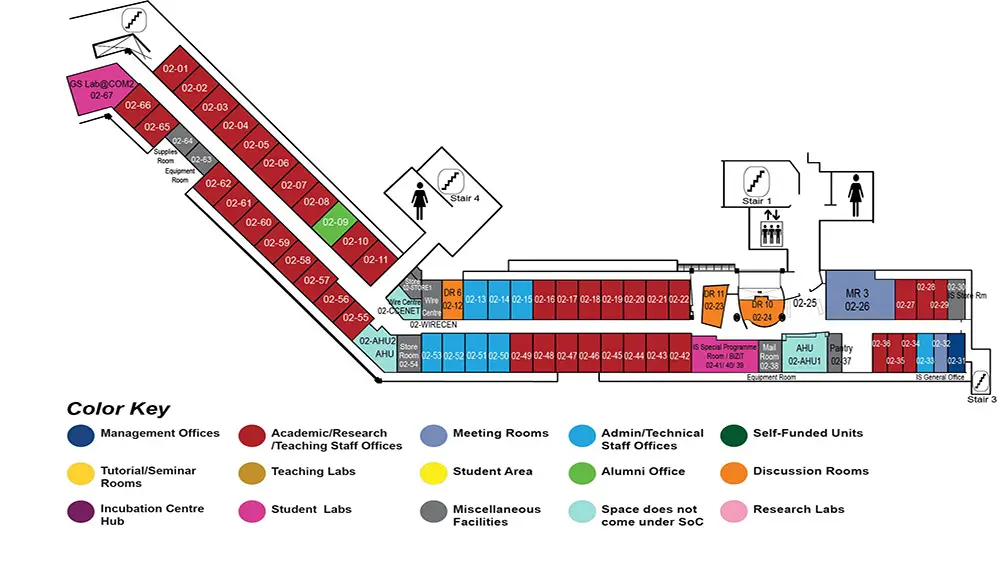
COM2 Level 2
MR3, COM2-02-26
Abstract:
Modern computing is shifting toward centralized, high-performance infrastructure consumed as a service, requiring sensitive workloads to be outsourced to third-party platforms. This trend is evident across traditional public clouds (e.g., Alibaba Cloud, AWS) and emerging AI inference services (e.g., OpenAI, Anthropic). Yet, decoupling compute execution from data ownership creates a fundamental trust gap.
Over the past decade, my research has leveraged Trusted Execution Environments (TEEs) to build full-stack secure systems that re-establish data confidentiality and execution integrity over untrusted infrastructure. Driven by practical impact, much of this work is rooted in close partnerships with industry leaders like AMD, Ant Group, and ByteDance.
In this talk, I will present key research thrusts spanning three layers: discovering hardware TEE vulnerabilities, architecting memory-safe TEE operating systems, and scaling secure multi-tenant LLM inference. I will conclude with a vision for developing Secure, Trustworthy, Efficient, and Privacy-preserving (STEP) full-stack infrastructure for next-generation AI systems.
Speaker Biography:
Yinqian Zhang is a Professor at the Southern University of Science and Technology (SUSTech). His primary research focuses on computer systems security. Prior to joining SUSTech, he was an Associate Professor at The Ohio State University. He is an ACM Distinguished Member, a recipient of NSF CAREER Award, CCF Young Computer Scientist Award, Rising Star Award from the Association of Chinese Scholars in Computing, and Lumley Research Award from The Ohio State University. He has been listed in the Stanford top 2% of most-cited scientists (lifetime impact) and named to MIT Technology Review China’s 2022 Privacy-Preserving Computation Tech Innovators. His research has won several academic awards, including a Test-of-Time Award from ACM CCS and multiple Distinguished Paper Awards from ACM CCS and IEEE S&P.