

"Fake Science" and Information Overload in Academia - Challenges and Opportunities for Information Retrieval Research
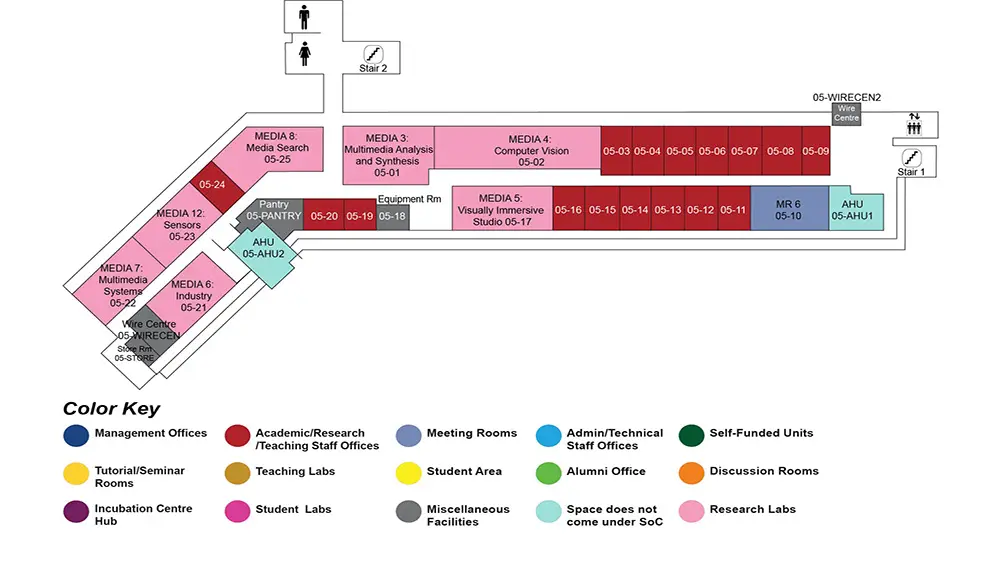
AS6 Level 5
MR6, AS6-05-10
This seminar is a hybrid event. If you are joining us online, please use the zoom details below:
https://nus-sg.zoom.us/j/7704478736?pwd=QU8ybHd5NThxR1hENUo5WXVyc0d5UT09
Abstract:
Scientific communication is experiencing unprecedented growth, with publication volumes increasing at a scale that overwhelms researchers’ capacity to process and evaluate information. This information overload is not only a byproduct of legitimate scholarly activity but is increasingly driven by low-quality and even fraudulent content. Alongside rigorous, well-designed studies, the scholarly record is also populated by weak methodologies, poorly vetted results, and intentional manipulation. The rise of AI-accelerated publishing, paper mills, tortured phrases, and other forms of “fake science” intensifies this problem, creating massive noise and undermining the reliability of academic information systems.
For the Information Retrieval (IR) community, this poses both critical challenges and unique opportunities. On the one hand, information overload and quality degradation pose a challenge that needs to be addressed more directly by models that, traditionally, are mainly considering topical relevance. On the other hand, advances in AI, NLP, and bibliometric-enhanced IR offer promising directions for filtering, ranking, and contextualising scholarly information. In this talk, we will examine the evolving problem of fake science and its role in driving information overload. We will outline recent developments in scholarly information access, highlight open research problems — from detecting low-quality and fraudulent content to designing veracity-aware retrieval and recommendation models — and discuss how IR research can contribute to ensuring that high-quality knowledge remains discoverable, trustworthy, and actionable in an era of overwhelming information abundance.
Bio:
Ingo Frommholz is Professor and Head of the School of Applied Data Science at Modul University Vienna, Austria’s leading private university. His research focuses on interactive information retrieval, quantum-inspired models, AI and deep learning, natural language processing, retrieval-augmented generation, and bibliometric-enhanced retrieval, with applications ranging from scholarly information access, digital humanities and scientometrics to cyberstalking detection. He has been Principal Investigator of major international projects such as the EU Horizon Europe OMINO project on information overload and the EU H2020 QUARTZ project on quantum-inspired information access. Ingo is Chair of the BCS Information Retrieval Specialist Group in the UK, Senior Managing Editor of the International Journal on Digital Libraries (Springer), and serves on the steering committees of leading ACM conferences including CIKM and SIGIR-ICTIR.