

Auditing Large Language Models: Accountability, Integrity, and Copyright
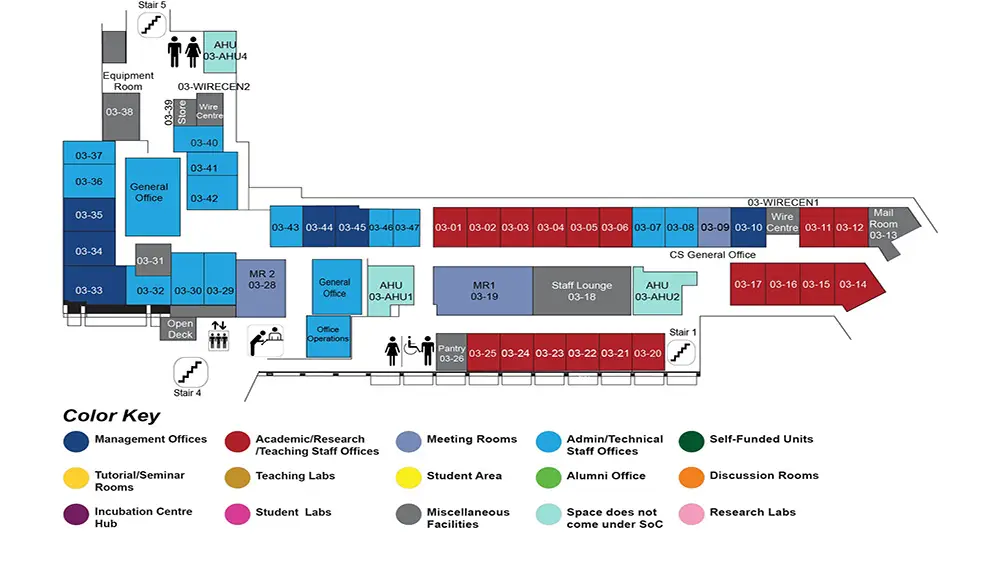
COM1 Level 3
MR1, COM1-03-19
Abstract:
Large Language Models (LLMs) have demonstrated strong capabilities across diverse domains, including text generation and software development. However, their rapid proliferation and deployment raise important challenges in accountability, inference integrity, and copyright protection. First, LLMs can be exploited to generate deceptive content, such as fake news and phishing messages, motivating effective mechanisms for content traceability and accountability. Second, the black-box nature of Model-as-a-Service makes it difficult for users to verify whether service providers actually deploy the models they claim, raising concerns about inference integrity. Third, the widespread use of Internet-scale training data, particularly open-source code, raises copyright and licensing concerns and motivates reliable mechanisms for auditing training-data usage.
First, to enhance accountability and content traceability, we address the limitations of existing multi-bit LLM watermarking techniques, which often fail to extract medium-length messages accurately, efficiently, and robustly. We introduce a novel watermarking method based on pseudo-random segment assignment, which distributes information redundancy more evenly across the embedded message while avoiding the exponential extraction cost of message enumeration. We further introduce balanced segment assignment and error-correction techniques to improve extraction accuracy and robustness against text modifications. In addition, we provide a provable robustness guarantee under text edit distance. Experimental results demonstrate that our approach achieves a superior tradeoff among extraction accuracy, robustness, and computational efficiency.
Second, we address the challenge of inference integrity by enabling users to verify that service providers execute the models they claim. We propose zkGPT, an efficient Zero-Knowledge Proof (ZKP) framework optimized for LLM inference. By exploiting the structure of transformer computations, we introduce techniques including constraint fusion and circuit squeeze to substantially reduce the overhead of proving both linear and non-linear layers. These optimizations reduce proof-generation costs by orders of magnitude compared with direct applications of existing proof systems. Our implementation can prove full GPT-2 inference in less than 25 seconds on CPU hardware.
Third, to protect the rights of data authors and support copyright compliance, we propose RepoMark, a data-usage auditing framework for code LLMs. RepoMark enables auditors to determine whether their code repositories have been used for model training by proactively marking code through semantics-preserving transformations and subsequently performing a ranking-based hypothesis test over semantically equivalent code variants. Unlike prior approaches, RepoMark provides a theoretical guarantee on the False Detection Rate (FDR) and remains effective even when auditing small repositories. Experiments demonstrate a detection success rate exceeding 90% on small code repositories under a strict 5% FDR, substantially outperforming existing data-usage auditing techniques.
Collectively, this thesis develops practical techniques for addressing three important challenges in auditing LLMs: generated-content accountability, inference integrity, and training-data usage. By improving the traceability of generated content, the transparency of model inference, and the auditability of training data, these techniques contribute toward more trustworthy and responsible development and deployment of large-scale AI systems.