

From Profiles to Reflection: A Dual Approach to Self-Regulated Learning
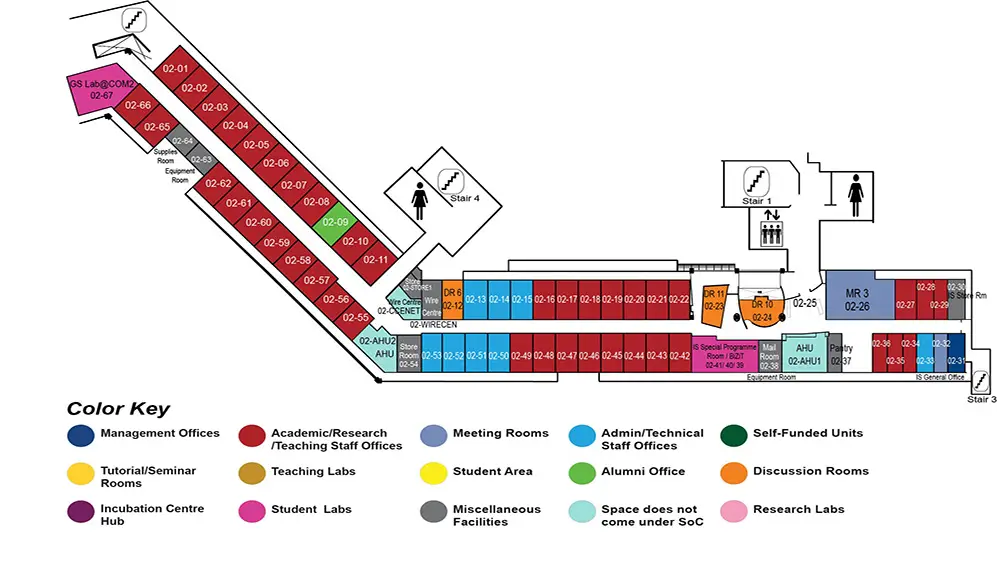
COM2 Level 2
MR3, COM2-02-26
Abstract:
Self-regulated learning (SRL) is essential in digital learning environments, where learners must increasingly manage their own cognition, motivation, and behavior. Research on SRL therefore faces two complementary tasks: understanding internal learner differences and designing external support for regulatory processes. This thesis addresses both by developing a theory-grounded computational approach to learner profiling and theory-driven design principles for reflection prompts.
Study 1 develops a behaviorally grounded computational approach to learner profiling. Existing methods seek to identify interpretable learner types from multidimensional measures of SRL and motivation, yet often produce profiles that do not predict learning behavior and collapse into general high, medium, and low strata. The study shows that this limitation is structural: conventional objective functions depend only on the input variables, leaving behavioral relevance formally absent from optimization. Drawing on Information Bottleneck theory, it defines learner types through behavioral equivalence, such that learners share a type when their motivational configurations carry the same behavioral meaning. It then derives a family of objective functions with a behavior-conditioned relevance constraint and establishes a theoretical boundary: excessive compression eliminates configurational structure and collapses profiles into level strata. Experiments using SRL and motivation questionnaire data from workplace and student samples support the approach across model architectures. The findings demonstrate how SRL theory can specify the optimization objectives of computational profiling methods.
Study 2 develops and tests design principles for reflection prompts. Drawing on the distinction between object-level processing and meta-level regulation, it theorizes reflection mode and prompt specificity as two design dimensions whose configurations should align with the temporal and attentional demands of the process level they are intended to elicit. These predictions are tested in a 2 × 2 factorial experiment using a mixed methods design that integrates behavioral traces with qualitative analysis of written reflections. The trace results support the predicted interactions, while the qualitative analysis shows that the corresponding prompt configurations direct reflection toward their intended process levels. An extension study then applies the validated configuration to compare learning with and without an AI learning aid. Mixed methods evidence indicates that AI reorganizes self-regulated engagement, shifting how object-level activity is carried out while learners continue to articulate meta-level regulation, even when final performance remains similar.
Taken together, these studies show that advancing SRL requires theory to inform both how learners are understood and how they are supported. Theory-grounded technologies can represent internal learner differences in behaviorally meaningful ways, while theory-grounded scaffolds can align external support with the regulatory processes they are intended to facilitate.