

Recent Progress on Agentic Workflow Optimization
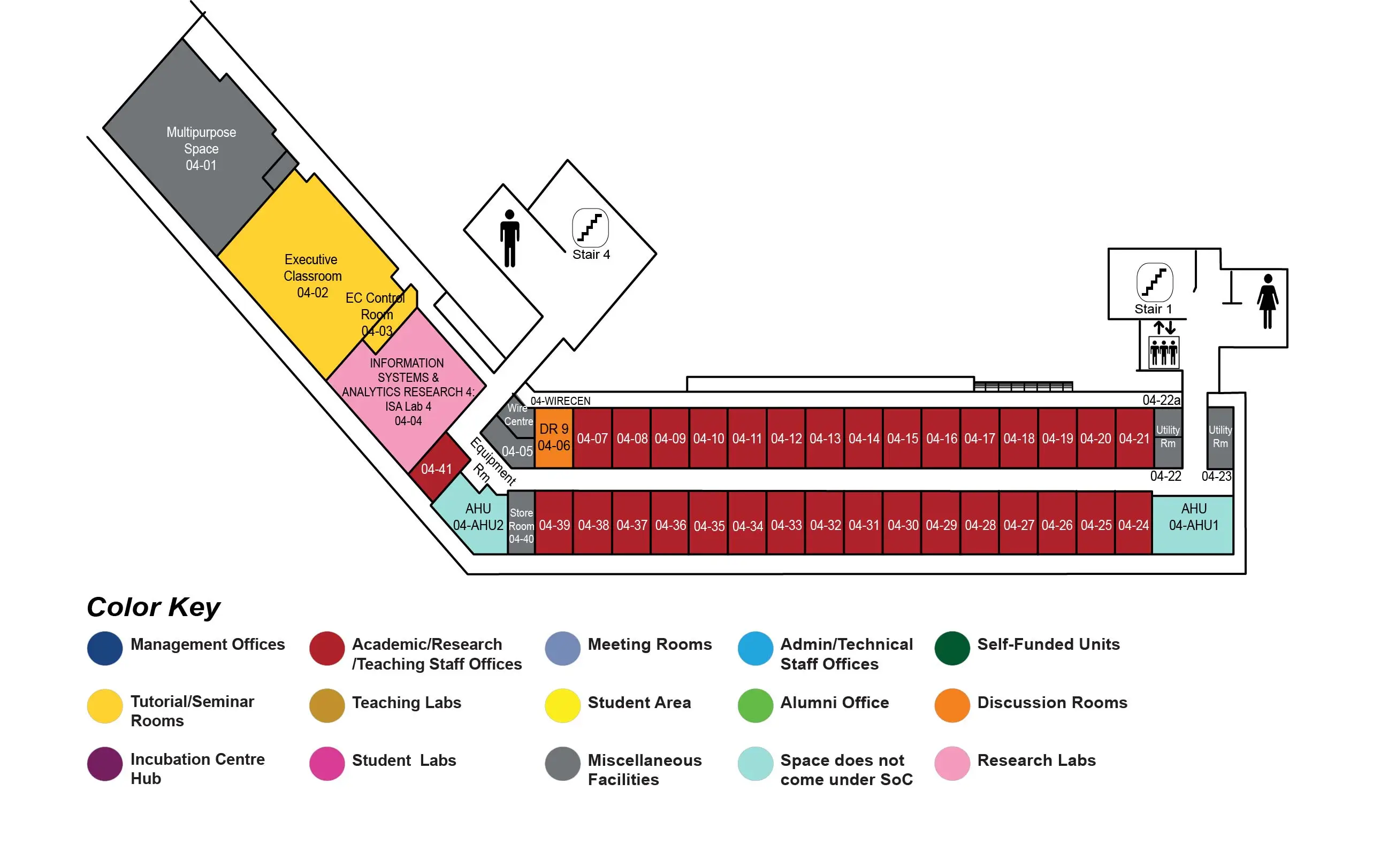
COM2 Level 4
Executive Classroom, COM2-04-02
Abstract:
Agentic workflows can substantially enhance large language model reasoning, yet their vast, discrete design spaces make optimization costly. This talk presents three complementary approaches from our team. First, DAGO replaces single-parent mutation with bandit-guided, multi-parent fusion over workflow graphs, enabling efficient recombination of complementary designs. Second, CB-Orchestrator decouples workflow generation from selection, using contextual bandits to adaptively choose a reusable workflow for each query while reducing training costs. Third, MASPOB optimizes prompts when workflow topology is fixed, combining graph neural networks, uncertainty-aware bandit exploration, and coordinate ascent to model agent interactions and control combinatorial complexity. Together, these works demonstrate how structured representations and exploration-exploitation principles can make agentic workflow optimization more adaptive, sample-efficient, and scalable.
Bio:
Dr. Zhongxiang Dai is an Assistant Professor (Presidential Young Fellow) in the School of Data Science at The Chinese University of Hong Kong, Shenzhen (CUHK-Shenzhen). Before joining CUHK-Shenzhen, Dr. Dai was a postdoctoral researcher at MIT in 2024 and at the National University of Singapore from 2021 to 2023. He received his bachelor’s degree in Electrical Engineering and PhD in Computer Science from NUS in 2015 and 2021, respectively. His research spans the theory and applications of machine learning. His applied work focuses on large language models, including LLM agents, personalization, post-training, social simulation, and prompt optimization, while his theoretical research centers on multi-armed bandits. He has published 48 papers in leading AI conferences and journals, including 37 at NeurIPS, ICML, and ICLR, and has served as an Area Chair for all three conferences and a Senior Program Committee member for AAAI. He has received support through national and provincial talent programs, competitive research grants at the national, provincial, and municipal levels, and industry-sponsored projects.