

Rethinking Industry Classification: Leveraging Llms For Multi-View And Multi-Label Approaches
COM1 Level 3
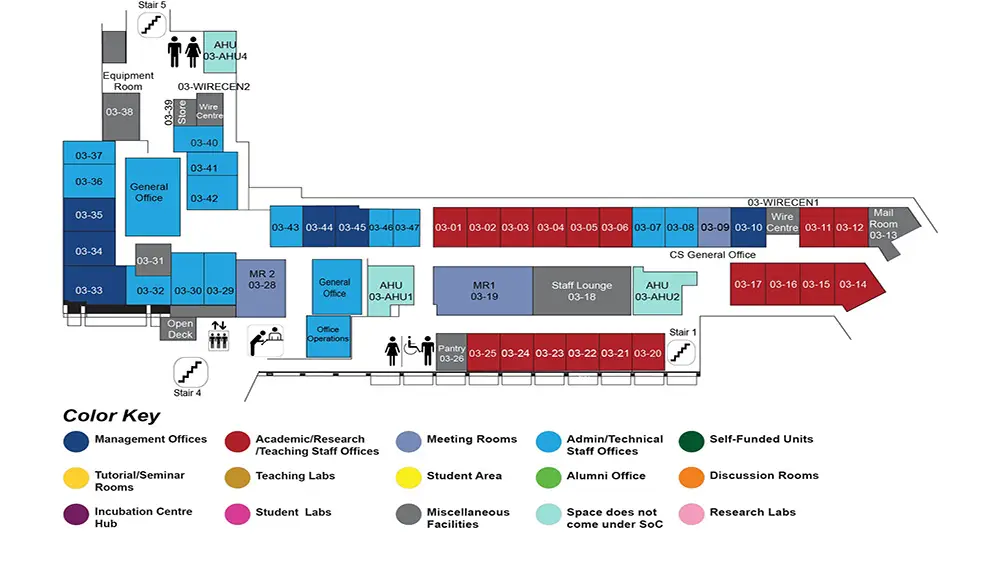
MR1, COM1-03-19
Abstract:
IIndustry classification is foundational in economics and finance, underpinning crucial decisions related to investment strategy, competitive analysis, and economic policy. Traditional single-label classifications (e.g., SIC or NAICS codes) often inadequately represent contemporary firms, particularly those diversified across multiple market segments. Motivated by this limitation, this dissertation leverages recent advances in large language models (LLMs) and unsupervised learning methods to develop more economically meaningful and empirically useful approaches for industry classification.
The first study develops an LLM-aided multi-view graph clustering model that integrates textual business descriptions from SEC 10-K filings, competitor co-mention networks, and traditional SIC/NAICS classifications within a unified clustering framework. In the text view, GPT-4 is used to summarize extensive business descriptions into concise embeddings intended to reflect firms’ core activities. Spectral clustering on these multi-view representations yields industry groupings that show stronger performance than conventional classifications on the reported evaluation metrics, including average intra-industry stock return correlation, peer-pair grouping, and financial-characteristic homogeneity.
The second study develops an unsupervised multi-label industry-classification framework that represents each firm through continuous exposures to multiple latent industries rather than forcing it into a single mutually exclusive label. The framework combines LLM-based text embeddings, a sparse product-market similarity graph, and return-based refinement in an iterative estimation procedure. The resulting classifications are evaluated using peer-pair grouping, dissimilar-pair separation, and out-of-sample explanatory power for future returns. Under the reported settings, the proposed framework outperforms BERTopic and LDA baselines in predictive validity and provides a better balance between grouping similar firms and separating dissimilar firms.
Overall, this dissertation makes methodological and practical contributions to the literature on industry classification. Study 1 shows that multi-view clustering can generate single-label groupings with stronger performance than traditional schemes on the reported metrics, while Study 2 develops and evaluates a framework that represents diversified firms through overlapping industry exposures within a product-market setting. Practically, these classifications can improve peer benchmarking, investment analysis, risk assessment, and industry-level research by better reflecting the complexity of contemporary product markets.