

Simulating Manager Surveys with Large Language Models: Measuring CEO Outlook, Uncertainty, and Overconfidence from Executive Communications
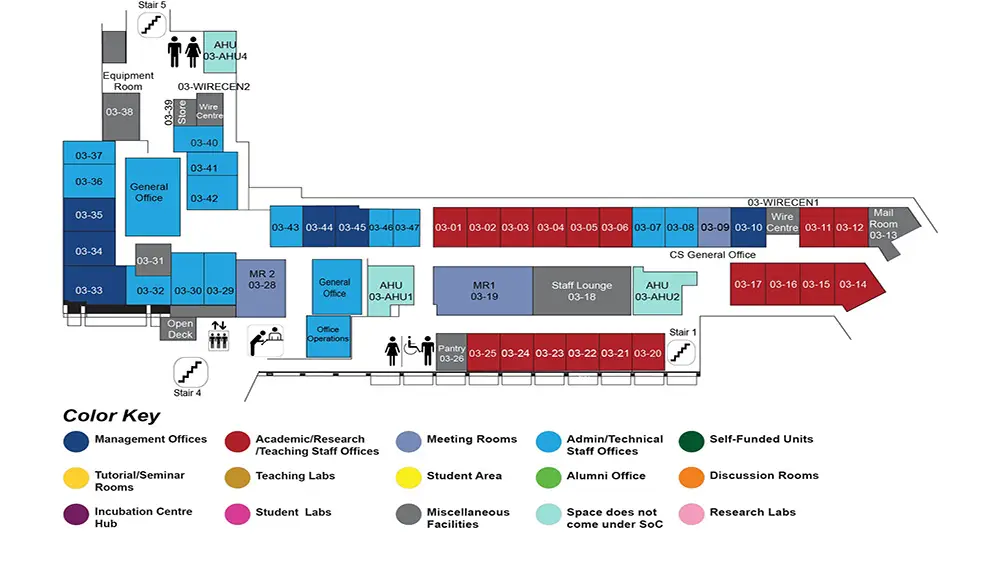
COM1 Level 3
MR1, COM1-03-19
Abstract:
CEOs’ disclosed forward-looking expectations shape corporate investment, hiring, financing, acquisitions, and resource-allocation decisions, yet measuring these expectations at scale remains difficult. Surveys offer construct-valid measures but are limited in frequency, coverage, and respondent burden, whereas scalable text-based proxies often conflate economic outlook with sentiment, tone, or communication style. Similarly, the CEO overconfidence literature has often relied on broad and relatively static proxies, despite behavioral theory suggesting that overconfidence can involve multiple belief distortions and change over time. This thesis addresses these gaps by developing a Large Language Model (LLM)-based virtual survey framework for extracting disclosed CEO-attributed expectations from earnings-call transcripts. Conceptually, the framework applies a survey rubric to unstructured text. The thesis then extends this framework to construct measures of multidimensional expressed CEO overconfidence and examine their corporate policy associations. The thesis consists of three empirical studies using S&P 1500 earnings-call and financial data from 2005 to 2025.
Study I develops and validates the virtual survey methodology for measuring disclosed managerial outlook. By prompting multiple LLMs to answer established survey-style questions using only contemporaneous and speaker-attributed earnings-call evidence, the study converts unstructured CEO discourse into structured outlook measures. Aggregated through latent-variable fusion methods, the resulting index closely tracks the Business Roundtable CEO Economic Outlook and outperforms dictionary- and BERT-based benchmarks in capturing major economic turning points. At the firm level, a higher disclosed CEO outlook predicts subsequent capital expenditure growth, investment rates, hiring growth, sales growth, and lower implied volatility.
Study II extends this framework from general outlook to the construct level of expressed CEO overconfidence. It conceptualizes overconfidence as a multidimensional profile of belief distortions rather than a single latent trait. The first dimension, Overestimation, concerns an upward bias in the expected level of future firm-relevant outcomes. The second, Overprecision, concerns excessive certainty or compressed subjective uncertainty around those outcomes. The third, Over-inference, concerns excessive weighting of directional signals relative to their realized reliability. The study operationalizes these three constructs at the CEO-quarter level and shows that they are empirically distinct. It further shows that expressed CEO overconfidence contains both stable CEO-level and time-varying components. Overprecision declines with experience, consistent with uncertainty calibration, whereas Over-inference rises over time, consistent with self-attribution.
Study III examines how the three overconfidence dimensions are associated with corporate-policy outcomes. The findings reveal distinct patterns rather than a uniform association across corporate activities. Overestimation is associated with higher investment, greater acquisition activity, lower dividend payout, and higher sales growth, consistent with an expansionary commitment channel. Overprecision is associated with selective increases in hiring and acquisition intensity, consistent with a concentrated commitment channel. Over-inference is associated with modestly higher investment but no corresponding sales growth, together with a persistent decline in asset turnover. This pattern is consistent with commitment without calibration, in which strong directional conviction is not matched by subsequent asset–revenue alignment.
Taken together, the three studies make methodological, theoretical, and empirical contributions. Methodologically, the thesis offers a scalable approach for converting CEO earnings-call discourse into structured proxy measures aligned with established survey constructs of disclosed managerial expectations. Theoretically, it contributes to behavioral corporate finance by documenting how different dimensions of expressed CEO overconfidence can be separately conceptualized and measured. Empirically, it shows that disclosed managerial outlook predicts real corporate behavior, that expressed CEO overconfidence contains both stable and time-varying components, and that different overconfidence dimensions are associated with distinct hypothesized corporate-policy outcomes. Overall, this thesis shows that LLM-based measurement can provide interpretable text-based proxies for disclosed managerial belief constructs and can help clarify how expressed executive expectations are associated with firms’ strategic and operational decisions.