

How Do Organizations Achieve Digital Resilience Under Acute And Chronic Crisis Conditions?
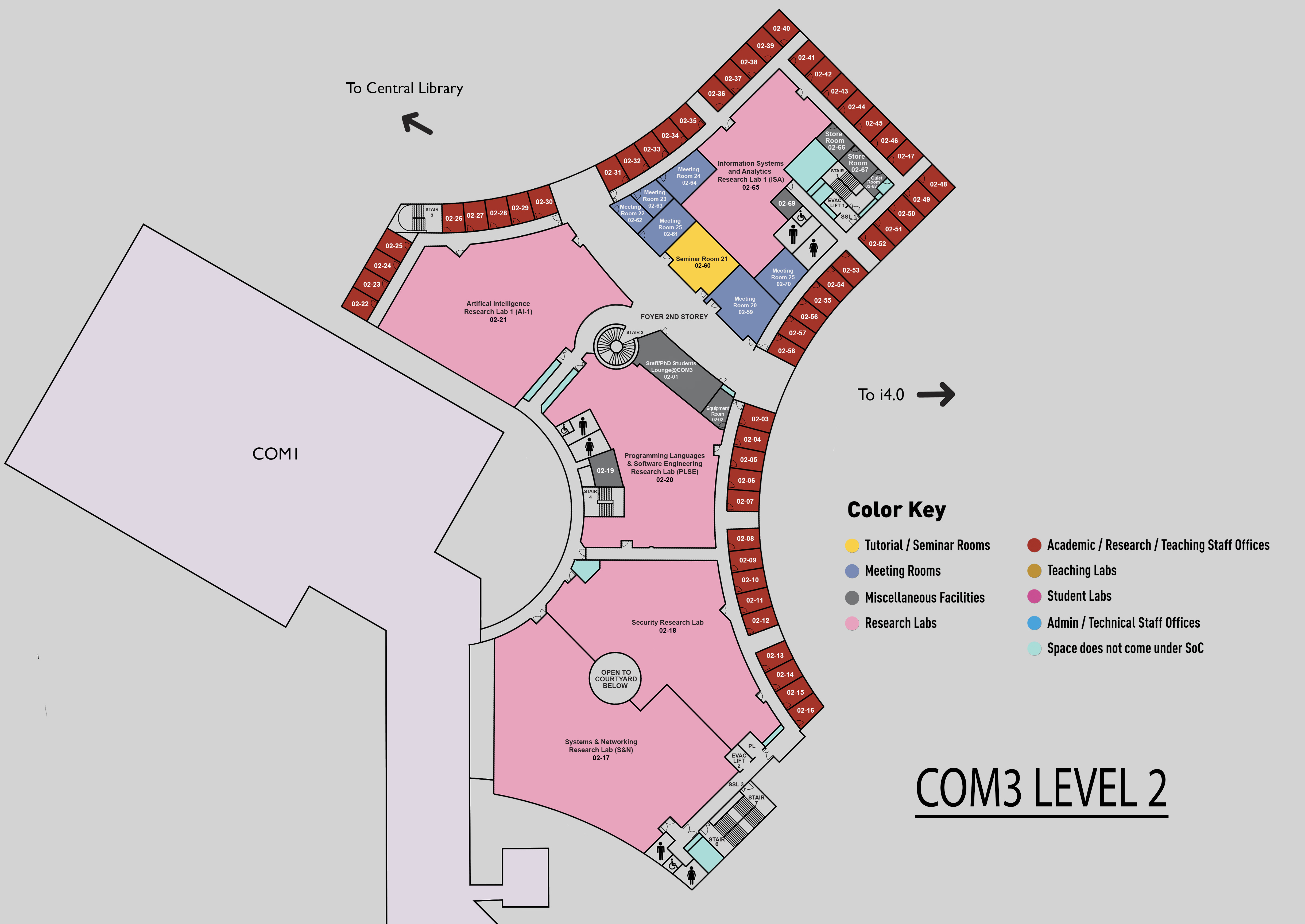
COM3 Level 2
SR21, COM3 02-60
Abstract:
Organizations today operate in environments where disruption is a recurring condition. Pandemics, natural disasters, technological shocks, and progressive shifts in customer behaviour place sustained pressure on established business models. Such disruptions can give rise to two analytically distinct forms of crisis. A crisis-as-event is a low-probability, high-impact situation that is unpredictable, surprising, and threatens the viability of the organization. A crisis-as-process, by contrast, is a process of weakening or degeneration that develops over time and may eventually culminate in an acute event. Across both forms, digital technologies have become central to how firms cope with crisis — a capability now widely termed digital resilience: the organizational capability to absorb, adapt, and transform through digital technologies in the face of crisis (Boh et al., 2023). Yet our understanding of how organizations actually achieve digital resilience remains limited, especially when the form of crisis itself varies. To address this gap, this dissertation presents two qualitative case studies of Asian organizations — one confronting a crisis-as-event, the other navigating a crisis-as-process.
The first study examines crisis-as-event through PetCo (pseudonym), one of the largest and oldest pet-care retailers in an Asian country, whose offline business model was rendered inoperable overnight by COVID-19 lockdowns. We examine how PetCo achieved Emergency Digital Scale-Up (EDSU) — the rapid expansion of digital operations under severe time pressure. The case reveals two pathways to EDSU, with the choice between them shaped by whether the solution space was well-defined or poorly defined: a replication-type pathway in which IT functioned as a one-to-one digital supervisor, and an innovation-type pathway in which IT functioned as an open platform ecosystem. Across both pathways, a common interactional mechanism — which we term bidirectional socio-technical accommodation — sustained EDSU as social and technical components compensated for each other's constraints rather than pursuing iterative joint optimization. These findings suggest that emergency-driven scale-up follows a contingency logic in which contextual conditions, digital properties, and socio-technical interaction jointly determine how quickly and at what scale digital resilience can be mobilized.
The second study examines crisis-as-process through TenderBaby (pseudonym), a leading premium brick-and-mortar (B&M) retailer of baby and maternal products in Asia, established about four decades ago. Successive waves of digital innovation — e-commerce, mobile, social, and AI-commerce — have progressively shifted customer preferences toward digital channels, eroding the firm's physical-channel-based business model. In response, TenderBaby has sustained omnichannel integration across every digital wave. At each wave, the firm confronts two recurring problems — a resource scarcity problem and a cross-channel cooperation problem — which it resolves through two mechanisms re-applied wave after wave: Resource-Focused Competition (operating through Parallel Omnichannel Idea Sourcing, Innovation-Focused Decentralizing, and Cross-Channel Contribution Tracking) and Coerced Cooperation (operating through Organisation-Wide Perspective Broadening, Expertise-Based Centralizing, and Centralized Resource Sharing). Together, these mechanisms constitute a routinized capability to keep transforming. The findings extend digital resilience theory beyond its crisis-as-event-focused framing: where the crisis has no terminus, the "new stable state" against which transformation-type digital resilience has traditionally been theorized does not exist; what the firm achieves instead is the capability to keep transforming as customer preferences continue to shift with each new wave of digital technology.