

Controllable Neural Retrieval Through External Knowledge
COM1 Level 3
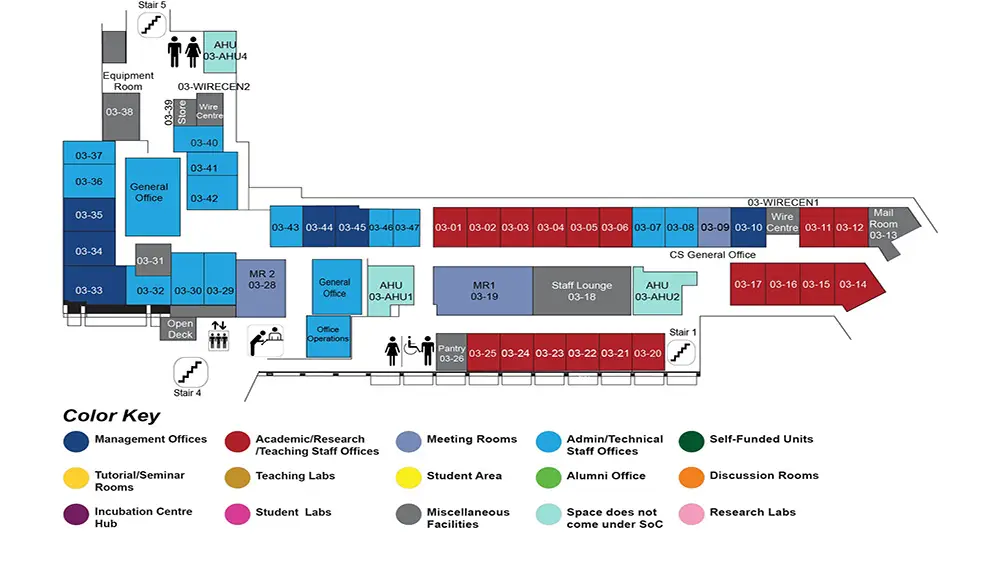
MR1, COM1-03-19
Abstract:
Neural retrieval systems, while powerful, operate as “black boxes” with limited interpretability and user control. This thesis introduces Controllable Neural Retrieval Through External Knowledge, leveraging external knowledge sources and geometric analysis to bridge the gap between opaque neural representations and human-understandable frameworks.
The research presents three complementary approaches. First, Entity Co-occurrence Networks for Text Enrichment constructs knowledge structures from QA datasets, using path analysis grounded in psychological theories to provide interpretable relevance assessment. An optimization framework maximizes contextual coverage while ensuring diversity, addressing the bias of dense retrievers toward prominent entities.
Second, the Semantic Field Subspace Framework connects abstract embedding spaces with underlying semantics through Semantic Field Subspaces (SFS). The SAFARI algorithm determines these subspaces via hierarchical clustering, while theoretical extensions of Weyl’s Theorem enable efficient approximation, achieving a 15–30x computational speedup for semantic analysis.
Third, the thesis addresses the geometric nature of Value Alignment, challenging the efficacy of scalar supervision in capturing complex normative trade-offs. We identify the phenomenon of gradient interference in scalar reward models and propose Subspace Steering as a robust alternative. By constructing value-specific directions via symmetric residual SVD, this method causally actuates suppressed normative perspectives at inference time, enabling precise control over value trade-offs without parameter updates.
Together, these approaches transform opaque neural representations into interpretable, controllable systems—the first through external knowledge integration, the second through semantic structure analysis, and the third through geometric intervention. The resulting systems improve retrieval accuracy while providing the transparency, diversity, and user agency essential for effective human-AI collaboration in information-seeking tasks.