

Algorithmic Impacts in Ride-hailing: Estimation of Congestion Effects and Behavioral Tipping Effects
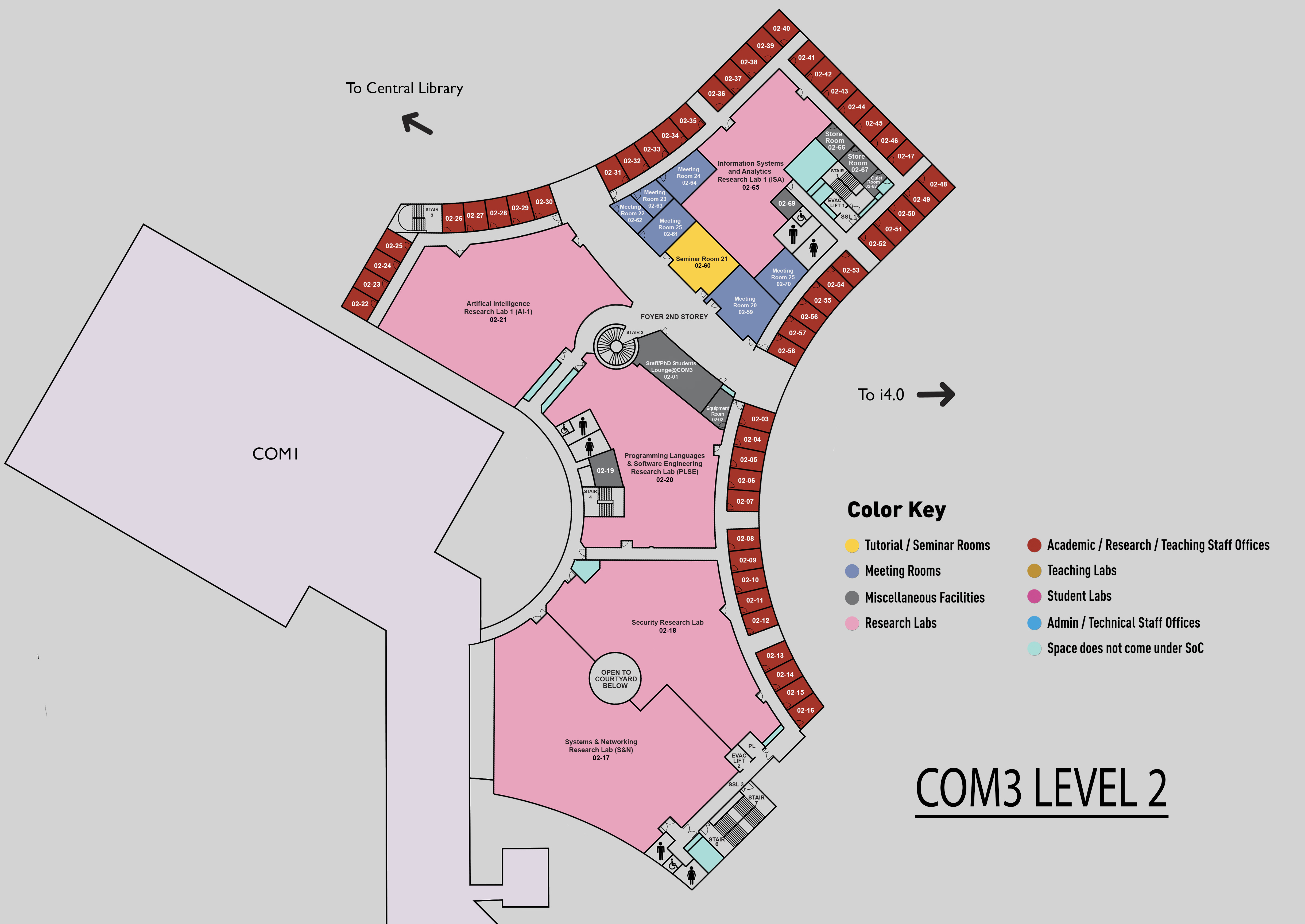
COM3 Level 2
MR21, COM3 02-61
Abstract:
The rapid expansion of the ride-hailing industry, spearheaded by platforms such as Uber and Lyft, has fundamentally reshaped urban mobility by offering Artificial Intelligence (AI)-driven, on-demand ride-hailing services. Despite the remarkable advancements and accelerated commercialization of the AI algorithm, along with its deep integration into ride-hailing platforms, there is still a lack of understanding of how the AI algorithm can be effectively harnessed to manage and improve ride-hailing services. My studies focus on designing the AI algorithm to estimate the congestion effect caused by the passengers’ pick-up and drop-off (PUDO) activities and investigating the societal impacts of implementing algorithmic pricing on passengers’ tipping behavior in ride-hailing services.
The first study focuses on proposing and designing a causal inference algorithm to estimate and mitigate the congestion effect of curbside pick-ups and drop-offs. Curb space is one of the busiest areas in urban road networks. Especially in recent years, the rapid increase in ride-hailing trips has induced massive pick-ups/drop-offs, which occupy the limited curb space that was designed and built decades ago. These PUDOs could jam curbside utilization and disturb the mainline traffic flow, evidently leading to significant negative societal externalities. However, there is a lack of an analytical framework that rigorously quantifies and mitigates the congestion effect of PUDOs in the system view, particularly with little data support and involvement of confounding effects. To bridge this research gap, this study develops a rigorous causal inference approach to estimate the congestion effect of PUDOs on general regional networks. A causal graph is set to represent the spatio-temporal relationship between PUDOs and traffic speed, and a double and separated machine learning (DSML) method is proposed to quantify how PUDOs affect traffic congestion. Additionally, a re-routing formulation is developed and solved to encourage passenger walking and traffic flow re-routing to achieve system optimization. Numerical experiments are conducted using real-world data in the Manhattan area. On average, 100 additional units of PUDOs in a region could reduce the traffic speed by 3.70 and 4.54 mph on weekdays and weekends, respectively. Re-routing trips with PUDOs on curb space could respectively reduce the system-wide total travel time by 2.44% and 2.12% in Midtown and Central Park on weekdays. Sensitivity analysis is also conducted to demonstrate the effectiveness and robustness of the proposed framework.
The second study investigates the societal impact of algorithmic pricing on passengers’ tipping behavior in ride-hailing services based on empirical evidence from the Uber platform. Unlike static pricing in traditional consumption contexts, algorithmic pricing dynamically adjusts prices to balance supply and demand, forming the cornerstone of two-sided platforms like Uber. We define the extent to which an algorithm charges a high real-time price given the same product or trip as algorithmic pricing aggressiveness (APA). While this aggressiveness is designed to enhance efficiency and boost platform revenue for two-sided platforms, little is known about how customers, who directly experience and pay for it, respond in their post-consumption behavior. We investigate one such critical response: customer tipping, a vital component of workers’ income and a contributor to their work motivation. We posit that aggressive algorithmic pricing may create a negative externality that inadvertently cannibalizes tips. Using high-frequency trip data from Uber in New York City and employing a linear regression framework validated by the Double Machine Learning (DML) model, we analyse the relationship between APA and tipping behaviour. Our empirical evidence shows that a 1% increase in the pricing aggressiveness is associated with a 0.028% decrease in the tip ratio. Mechanism tests suggest that this reduction is driven by a lack of algorithm transparency, leading passengers to express dissatisfaction through the channel they control: the tip. Our findings reveal a critical tension in platform governance. While algorithmic pricing aims to efficiently allocate driver supply, its aggressiveness can inadvertently undermine driver earnings by suppressing tips. This suggests that the net benefit of algorithmic pricing for drivers may be lower than currently assumed. Platforms should therefore improve algorithm transparency or redesign incentive structures to safeguard driver welfare, ensuring that the efficiency gains of algorithmic pricing are not achieved at the cost of equity where the platform gains more at the expense of drivers.