

Advanced Diffusion Robot Manipulation Policies for Language Reasoning, Long-Horizon Planning, and Skill Abstraction
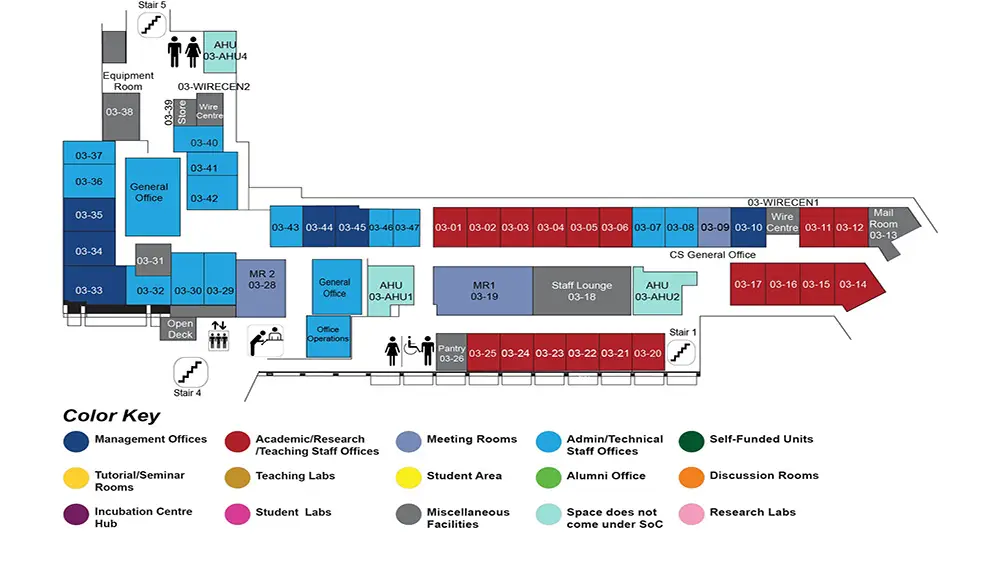
COM1 Level 3
MR1, COM1-03-19
Abstract:
Robotic manipulation is increasingly expected to follow open instructions, execute multi-step tasks, and transfer competence across settings. Diffusion models have emerged as a strong paradigm for learning from demonstrations: they model multi-modal action distributions, produce smooth on-manifold rollouts, and integrate perception and control in a unified generative process. Nonetheless, practical deployment remains limited by three challenges: grounding open-vocabulary language, maintaining coherent long-horizon behavior, and composing transferable skills under tight runtime budgets.
This thesis proposes three methods that improve diffusion policies along these axes.
(1) Language reasoning. We propose a framework (DISCO) to convert open-vocabulary instructions and multi-view perception into task-level keyframes, then use an inpainting-style optimization to guide diffusion rollouts toward those keyframes while staying near the data manifold. This yields stronger zero-shot instruction following, robustness to paraphrase and object variability, and fewer off-task deviations.
(2) Long-horizon planning. We design coupled hierarchical diffusion (CHD) method to co-generate subgoals and motion segments within a hierarchical diffusion process, adding lightweight feedback that aligns subgoals with emerging low-level trajectories and an efficient denoising schedule. Experiments in long-horizon path and task planning validate CHD’s ability to plan reliable subgoals and segments over hundreds of steps.
(3) Skill abstraction. We introduce a diffusion-based skill mixture-of-experts policy (SMP) that discovers reusable skills and activates only a small subset at inference. Orthogonal basis decomposition and gate stickiness ensure robot skill disentanglement and coherency. Multi-task learning and transfer learning experiments prove that SMP supports modular skill reuse, few-shot adaptation, and lower latency without sacrificing accuracy.
Together, these contributions demonstrate diffusion policies that better match everyday manipulation demands: they understand open-vocabulary language, plan coherently over extended horizons, and transfer skills efficiently across tasks and embodiments.