

ApneaEye : Scalable and Non-Contact Screening Tool for Sleep Apnea using Thermal Imagery
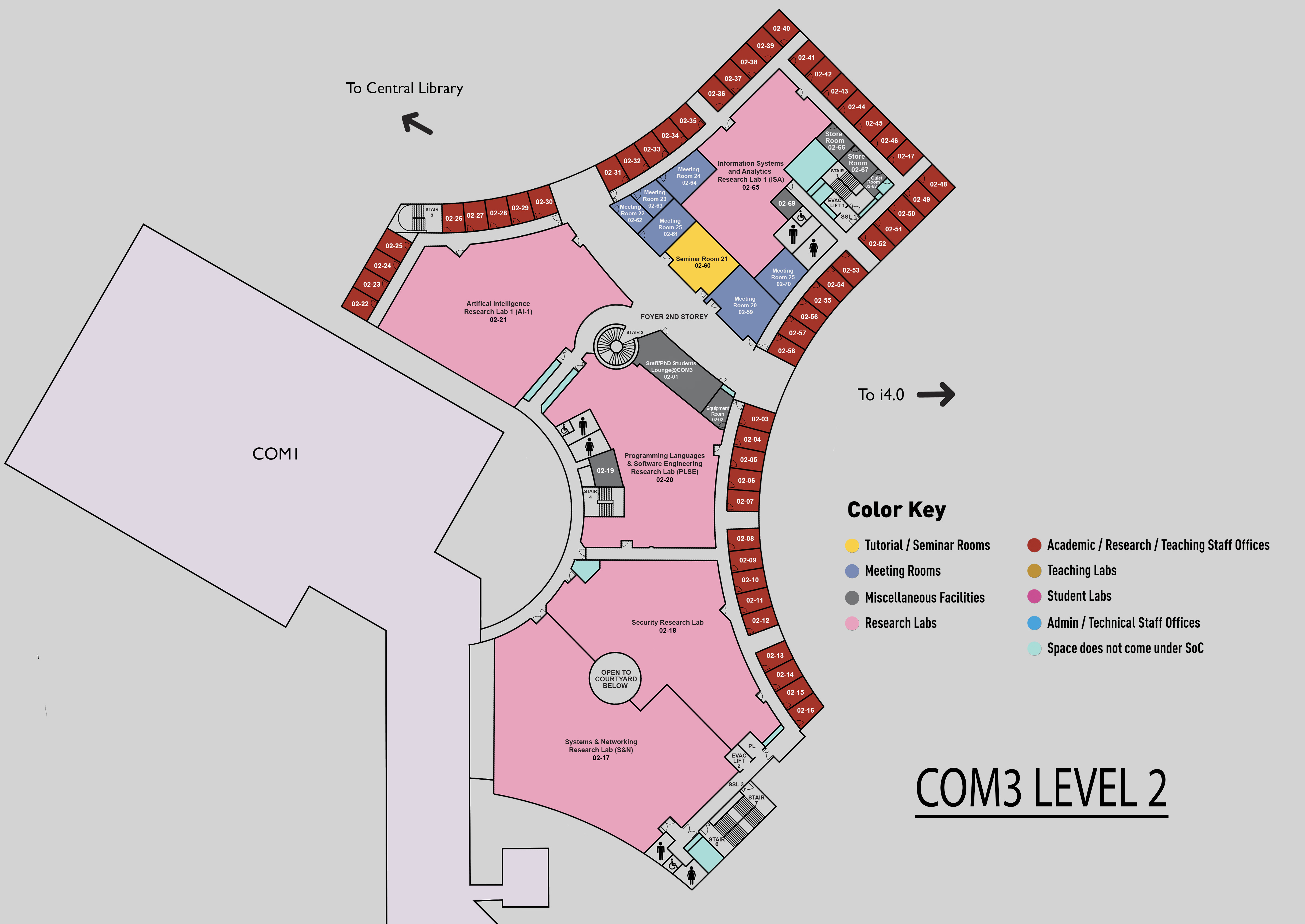
COM3 Level 2
MR24, COM3 02-64
Abstract:
Over one billion people suffer from sleep apnea, impacting sleep quality and increasing long-term health risks.
Despite its prevalence, diagnosis still relies heavily on polysomnography (PSG), which is an overnight sleep study that is costly, uncomfortable, and inaccessible to many.
PSG follows the guidelines of the American Academy of Sleep Medicine (AASM) to determine the severity of apnea using the Apnea-Hypopnea Index (AHI), which measures the number of apnea and hypopnea events per hour of sleep.
Although there are simpler screening tools, many fall short of AASM standards because they are only indirect estimates of the actual phenomena and omit key biomarkers such as nasal airflow and thoracoabdominal respiration.
To address this, we introduce ApneaEye, a non-contact screening tool that utilizes low-resolution thermal imaging to monitor nasal airflow and thoracoabdominal motion, without requiring on-body sensors. By capturing both breathing dynamics and body movement, ApneaEye enables accurate classification of the severity of sleep apnea while complying with the AASM criteria. We evaluated ApneaEye on approximately 535 hours of thermal and PSG recordings from 70 participants, including 24 healthy individuals and 46 sleep apnea patients. The system achieved a correlation coefficient of 0.95 for AHI estimation and correctly identified apnea severity in 84% of cases. Misclassifications, when they occurred, were only one severity class off. These findings highlight thermal imaging as a viable, accessible, and non-invasive alternative for at-home monitoring and screening for sleep apnea.
Biodata:
Nipun Batra is an Associate Professor in Computer Science at IIT Gandhinagar, where he leads the Sustainability Lab. He previously completed his postdoc from University of Virginia and his PhD from IIIT Delhi as a TCS PhD fellow. His group develops AI-powered solutions for critical sustainability challenges including smart buildings, air quality monitoring, and wearable healthcare technologies. His work has been awarded several awards, including ACM SigEnergy Rising Star Award 2025, Excellence in Teaching Award IITGN 2024, Young Alumni Award IIIT Delhi 2023, Best PhD Presentation ACM SenSys 2015, Best Demo ACM BuildSys 2014, and Best Video Nominee ACM KDD 2016