

Data Optimization and Collaboration for Data-Efficient AI
Dr Low Kian Hsiang, Associate Professor, School of Computing
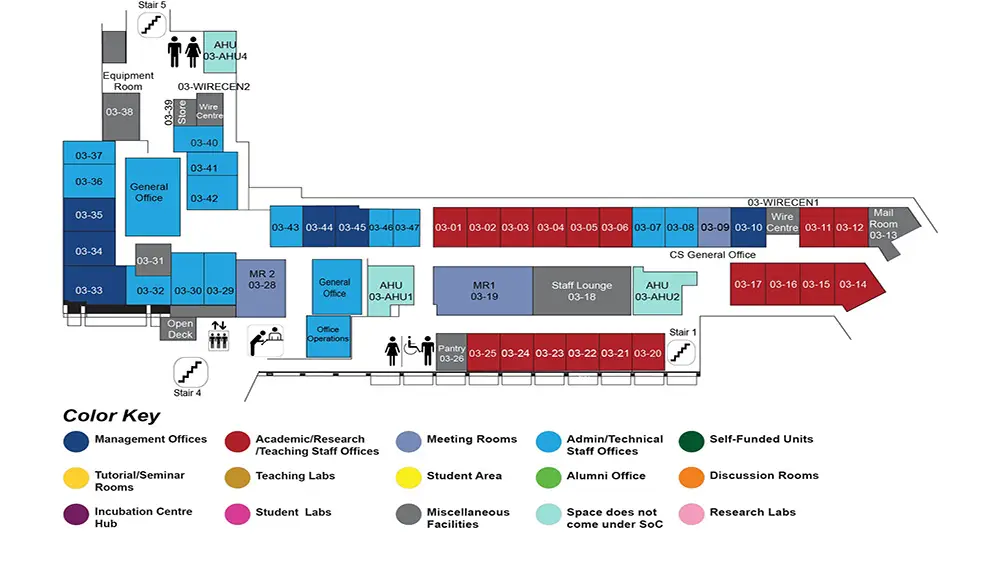
COM1 Level 3
MR1, COM1-03-19
Abstract:
The rapid progress in Artificial Intelligence (AI) has been primarily driven by scaling—larger model architectures, increased computational resources, and increasingly extensive datasets. This paradigm has led to remarkable breakthroughs across a wide range of applications. However, recent studies suggest that this approach is reaching its limits: both public and proprietary data sources are becoming saturated, and further increases in model size no longer yield proportional performance gains. These constraints underscore the urgent need for data-efficient AI—developing methods that improve model performance not by using more data, but by learning more from the same or with even less data.
This thesis investigates data-efficient AI from two complementary perspectives: data optimization and data collaboration. Data optimization aims to improve model performance by selecting the most effective data from the available data, while data collaboration enables multiple data holders to train better models collectively, without acquiring more data individually.
Data optimization includes both optimizing training data via data selection and optimizing data at inference time via prompt optimization. For optimizing training data, we address two key challenges: (1) How to select data without prior knowledge of the target application or validation distribution? (2) How to scale data valuation-based selection methods to large models and datasets? We propose distributionally robust data valuation and the top-m data values identification algorithm to address these challenges. For optimizing data at inference time, we focus on prompt optimization in large language models (LLMs), tackling two main challenges: (1) How to efficiently optimize prompts for black-box LLMs? (2) How to optimize prompts without access to a performance metric? We develop a neural bandits-based algorithm for the former and a framework of prompt optimization with human feedback for the latter, removing the need for a performance metric.
Data collaboration offers an alternative perspective to achieving data-efficient AI. In low-data regimes where privacy or ownership constraints hinder data sharing, we explore collaborative machine learning (CML) as a viable solution. However, the self-interested nature of data parties often discourages them from contributing high-quality data. To promote collaboration, incentive mechanisms have been proposed to reward parties proportionally to their contributions. Yet, how to design such incentives without relying on monetary rewards remains an open question. Moreover, the “rich-get-richer” phenomenon—identified in our work—further discourages collaboration. To address these challenges, we propose a fair, model-based reward and mitigate the phenomenon through the guarantee of asymptotic equality.
Overall, this thesis proposes principled and practical methods for achieving data-efficient AI through both data optimization and data collaboration, contributing to the development of more effective and sustainable AI systems.