

Style-specific harmonization and accompaniment
Dr Kathleen Rose Agres, Yong Siew Toh Conservatory of Music
AS6 Level 5
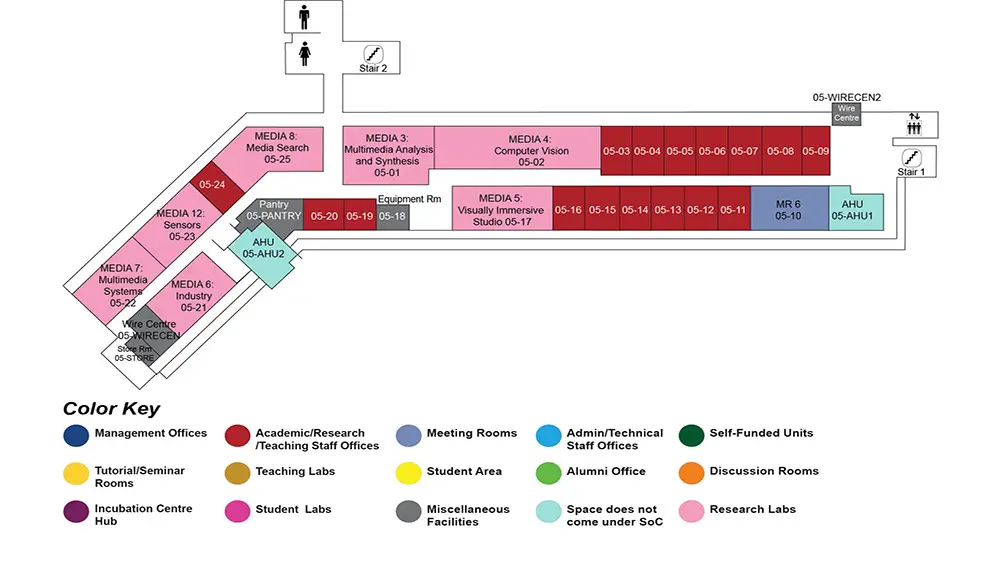
MR6, AS6-05-10
Abstract:
Automated music composition (AMC) aims at applying computer algorithms to create music. It enables musical novices with limited knowledge to create new music and helps professional musicians to enhance their creative process. More importantly, it fosters collaboration between musicians and non-musicians, leading to diverse applications like music for videos, games, and therapy.
AMC is not a single, monolithic task. In the broadest sense, AMC can be divided into two main tasks: (1) generation of music structure and melody and (2) generation of chords and accompaniment. The first task of generating melody is well-studied. The second task is important for generating music with multiple voices that also harmonize with each other. Therefore, this thesis focuses on the task of generating chords and accompaniment given the melody of a target music piece, complete with its music structure.
A variety of methods have been developed to generate chords and accompaniment, but they have some shortcomings. Most existing methods are trained on a large training set of a specific genre such as pop or jazz. To accommodate to different styles, they need to train a different version of the method on a different style-specific training set, increasing the total training time. If they are trained on a mixed-style set that contains examples of various styles, they will mix up the styles and produce results that are diluted in style. Moreover, existing methods cannot cater to cadence and voice leading. Many recent deep neural networks (DNNs) for chord generation are tested on 8-bar phrases instead of complete music pieces. While this makes testing easier, they cannot handle the global structure of music which leads to better overall harmonic coherence.
This thesis proposes a method of harmonization called FlexChord that overcomes the shortcomings of existing methods. FlexChord achieves style specificity by producing chord progressions that match the style of a selected set of example music, which can be as little as a single music piece. It applies non-iterative, multi-objective optimization during chord generation that does not require training. Thus, it can easily produce chord sequence of a specific style or a custom style. The requirement of cleaning, annotating and training on large datasets is avoided. In addition, FlexChord can handle cadence and voice leading effectively. It can generate chords that match full-length melodies, complete with global music structure.
This thesis also proposes a method called FlexFlow for generating accompaniment to multi-section melodies using chords generated by FlexChord. It achieves style specificity by producing accompaniment that matches the style of a selected set of example music. Thus, it can easily produce monophonic or polyphonic accompaniment of a specific style or a custom style. It applies direct optimization during accompaniment generation that does not require training. The requirement of cleaning, annotating and training on large datasets is avoided. In addition, it can handle phrase and section closure. It can also generate complementary or contrasting sections consistent with the global music structure of the given melody.
FlexChord and FlexFlow show strong performance as flexible methods for harmonization and accompaniment generation respectively. Both quantitative and qualitative results show that they perform better than comparable existing methods. In addition, results of human perception tests show that their generated chords and accompaniments are better than those of comparable existing methods and are close to human-composed chords and accompaniments.