

Towards Reliable AI under Distribution Shifts: A Data-centric Perspective
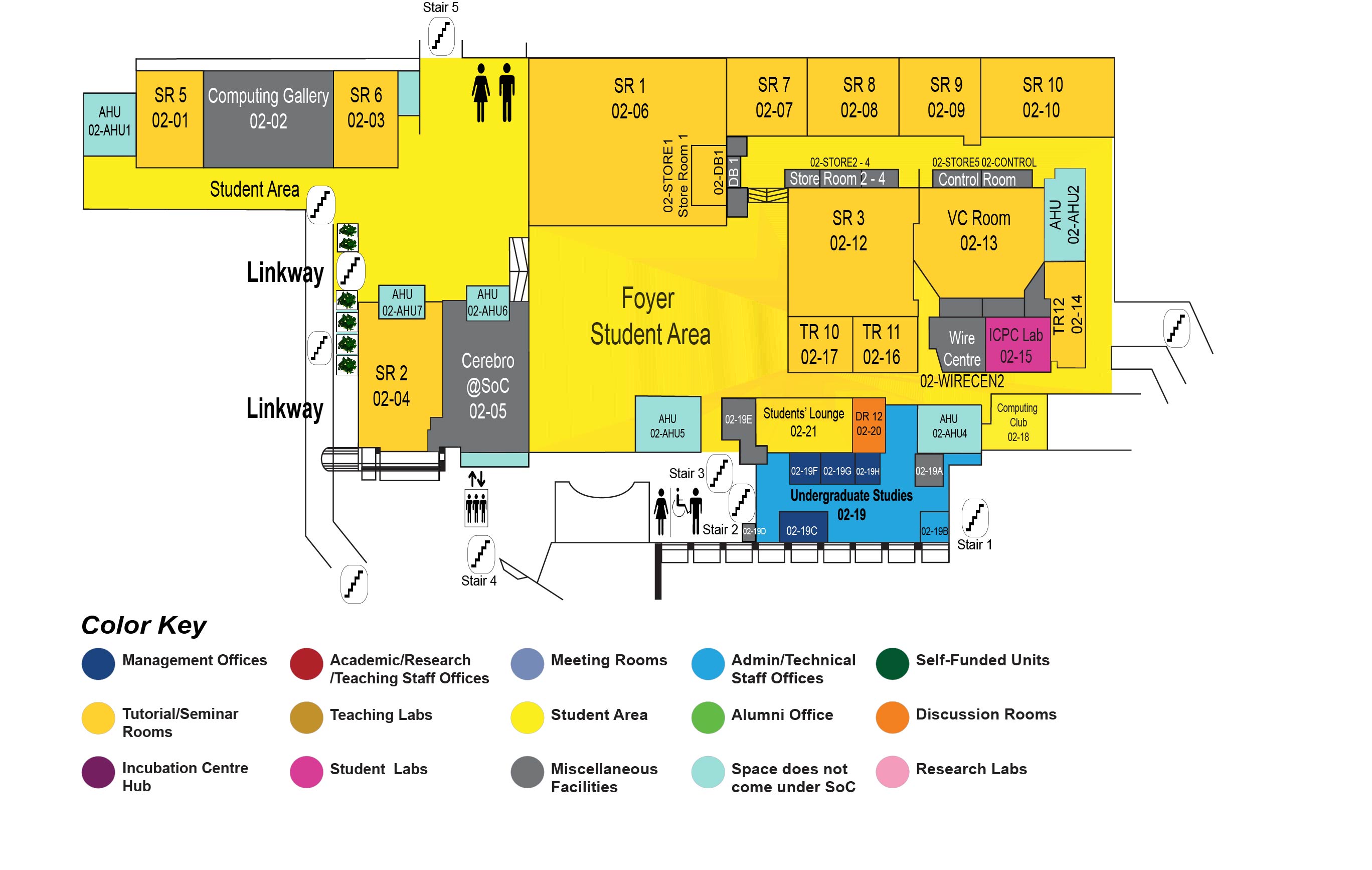
COM1 Level 2
TR12, COM1-02-14
Abstract:
Machine learning (ML) models often rely on spurious correlations in the training data, leading to performance degradation when processing inputs that differ from the training set. The sensitivity to distribution shifts undermines the reliability and trustworthiness of the models, posing serious challenges for their deployment in high-stakes decision-making scenarios. This thesis systematically studies the robustness to distribution shifts for ML models from a data-centric perspective.
First, we closely examine the effect of low-quality data on model generalization. Through theoretical analysis, we show that when training with empirical risk minimization (ERM), label noise exacerbates the effect of spurious correlations in the training data. We further demonstrate that while certain data-agnostic approaches for domain generalization exhibit implicit noise robustness, this advantage fails to translate into improved performance over ERM in real-world tasks.
After identifying the practical limitations of the data-agnostic approaches, we introduce two data-centric strategies to improve the reliability of ML models. To combat label noise, we propose to efficiently approximate the Shapley value using the empirical Neural Tangent Kernel, which forms a core component of the Fine-tuning-free Shapley value (FreeShap) algorithm. To improve the robustness to subpopulation shift, we develop group-robust sample reweighting (GSR), a bilevel optimization formulation that optimizes the robustness objective by reweighting the training data using the influence function.
Finally, we address the shortage of high-quality data for causal inference, a technique for extracting the underlying causal relationships instead of the spurious correlations within the data. Specifically, we devise a game-theoretic framework, collaborative causal inference (CCI), which incentivizes data sharing among self-interested parties to obtain more reliable causal estimates.