

Property-Aware Human Mobility Learning for Citywide Spatio-Temporal Forecasting
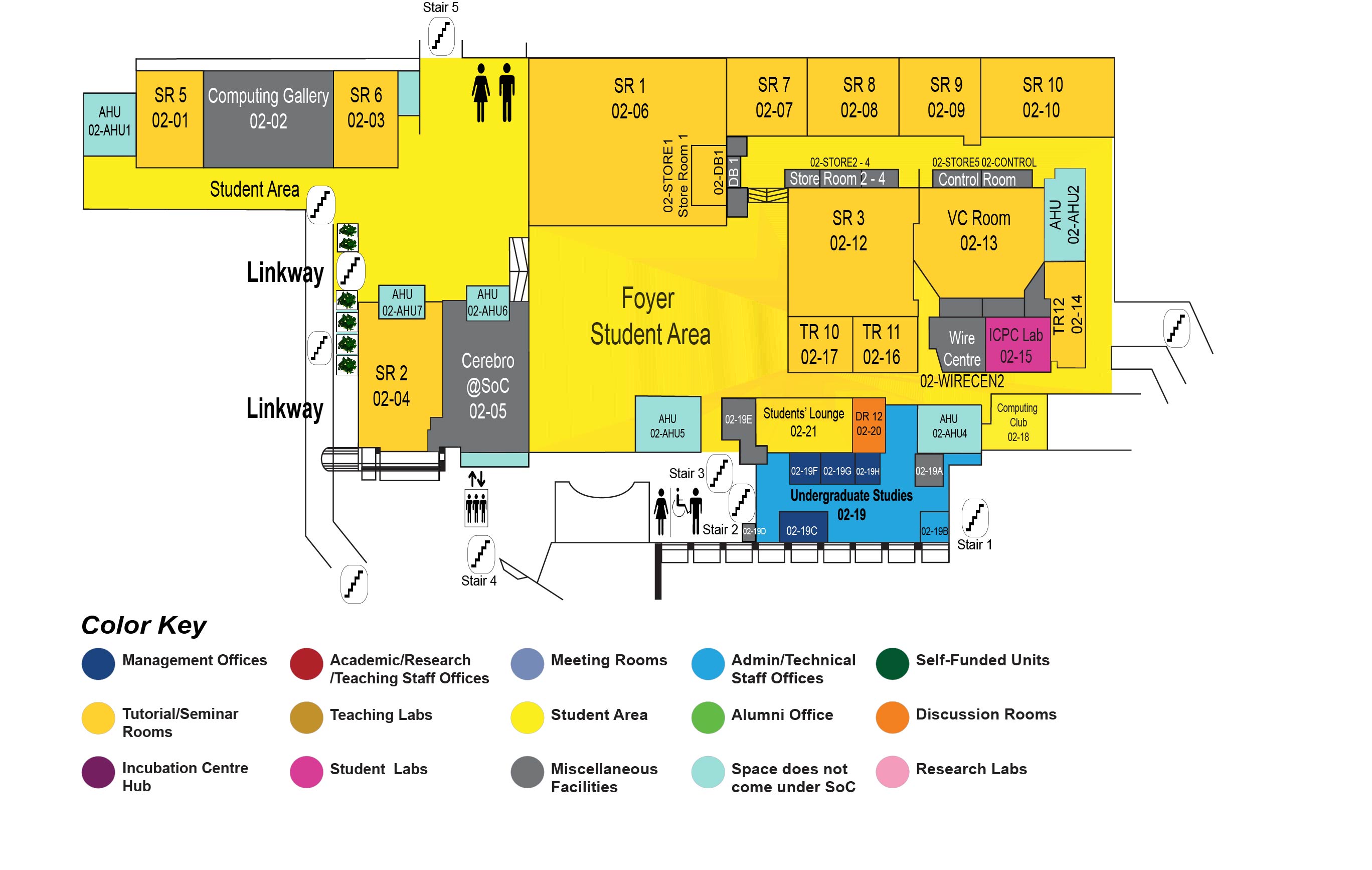
COM1 Level 2
SR7, COM1-02-07
Abstract:
The widespread deployment of urban sensors has generated rich citywide spatio-temporal (ST) data for traffic, enabling accurate citywide forecasting. Such forecasting is essential for traffic management and supports applications like intelligent scheduling, simulation, and infrastructure planning.
This thesis focuses on developing deep learning frameworks to enhance citywide spatio-temporal (ST) forecasting by considering various key properties of the data. In addition to spatio-temporal correlations, it investigates other important properties such as periodicity, invariant spatial correlations, data imbalance, and distribution shifts, and proposes methods that explicitly integrate these properties into model design and learning strategies.
First, to incorporate periodicity, we propose a periodic residual learning framework that models variations between previous and future periods, facilitating model training and improving forecasting accuracy. It also employs a CNN-based spatial-channel enhanced encoder to refine intermediate features and strengthen spatio-temporal representations.
Second, to consider invariant spatial correlations influenced by urban zoning and functionality, we introduce a causal attention mechanism that identifies these correlations through causal intervention. A Global-Local Attention Encoder is used to jointly learn local and global spatio-temporal patterns by focusing on nearby intervals and removing redundant long-range features.
Third, to handle rare but important events such as holidays, we design a neuron-level training strategy that detects neurons associated with low-frequency patterns using a perturbation-based method and selectively fine-tunes them while maintaining performance on high-frequency patterns.
Finally, to address distribution shifts over time, we propose a distribution-aware online learning framework that adapts to gradual and location-specific shifts through streaming memory and location-specific learners. This improves forecasting accuracy and reduces unnecessary updates.
These methods incorporate key properties of citywide ST data, enabling more accurate and effective forecasting, as demonstrated on real-world datasets.