

Towards Resolving the Scarce Data Challenge in Time Series Analytics
Dr Tung Kum Hoe Anthony, Professor, School of Computing
COM1 Level 2
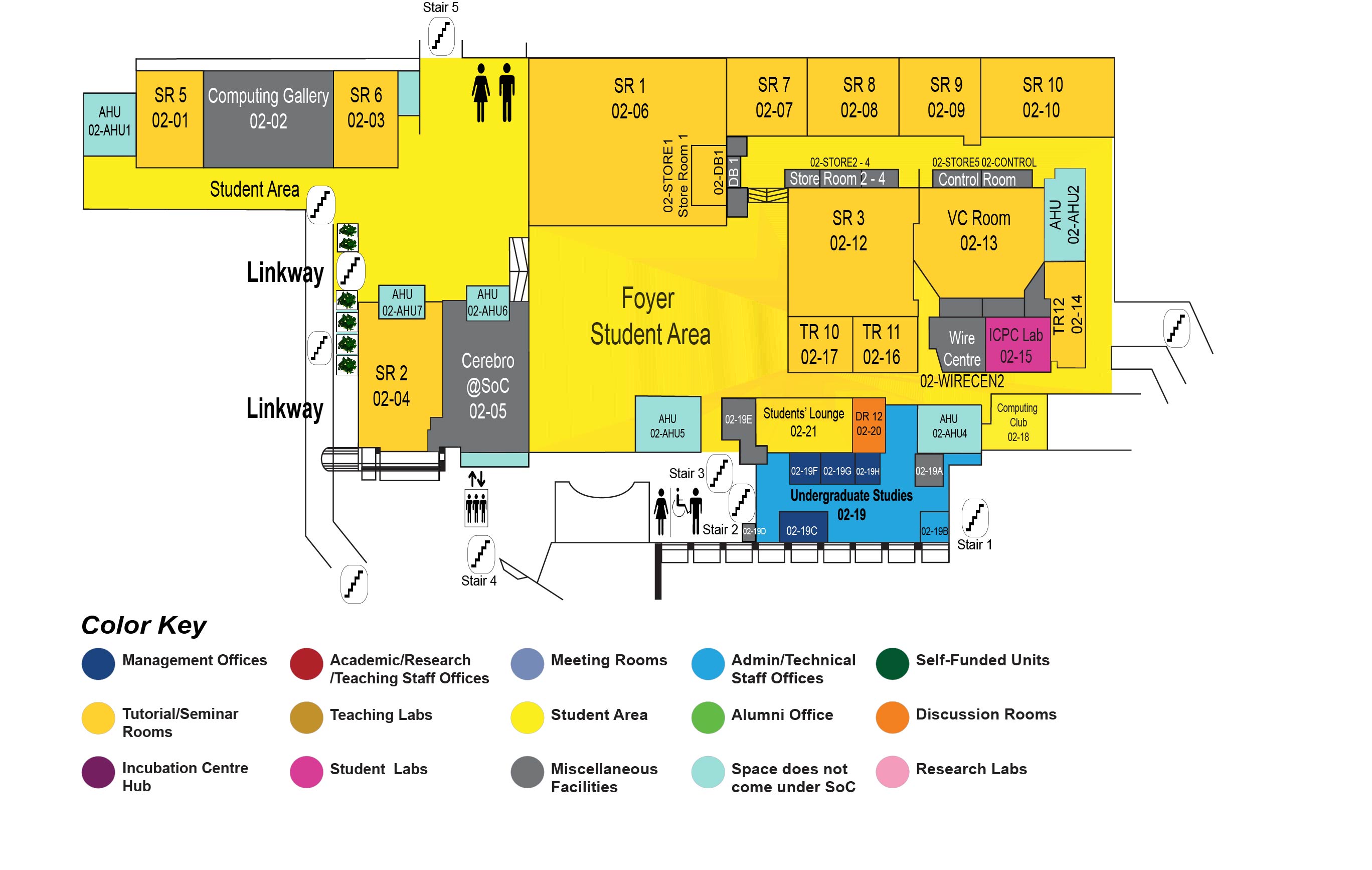
SR2, COM1-02-04
Abstract:
In time series analytics, especially in industrial applications, addressing the issue of scarce data presents a significant challenge. This scarcity, characterized by a limited amount of data available in rare or unique conditions or situations that are hard to replicate, often compromises robustness and efficacy. This thesis delves into this issue by highlighting the inherent difficulties in dealing with scarce data, emphasizing the need for innovative approaches to identify, collect, and control time series data under specific conditions. This sets the stage for exploring novel methodologies to overcome these challenges, underscoring the critical role of time series analytics in enhancing operational efficiency and predictive maintenance in various industrial contexts.
We first try to address the scarce data problem by identifying rare but impactful anomalies within sensor-based Multivariate Time Series (MTS). Our solution, CAD, is an advanced Correlation analysis-based Anomaly Detection method. It adeptly converts MTS into time series graphs, where vertices represent sensors, and edges connect sensors with high correlation in a certain period, identifying anomalies by tracking vertices with unusual correlation variations. Despite the inherent limitations of scarce data in historical records, by analyzing these variations with a theoretical guarantee, CAD demonstrates a remarkable proficiency in early capturing elusive anomaly patterns and identifying affected sensors. We also present EADS, an Early Anomaly Detection System built upon CAD for sensor-based MTS.
After deploying EADS, we observe that data scarcity is evident even in uncommon yet normal conditions, impacting the precision of anomaly detection. Hence, it is crucial to generate synthetic time series that mimic these rare but normal conditions. Existing Time Series Generation (TSG) methods, however, face several challenges: (1) biases due to inconsistent dataset selection and preprocessing, (2) ambiguous evaluation measures hindering uniform comparisons, and (3) methods tailored for data-rich contexts failing to address the nuances of data-scarce scenarios. To overcome these issues and progress from the challenge of identifying anomalies to the complexity of collecting sufficient relevant data, we introduce TSGBench, an inaugural benchmark for TSG. TSGBench comprises (1) a well-curated selection of real-world datasets, (2) a suite of evaluation measures, and (3) a novel generalization test based on Domain Adaptation, making it essential to evaluate TSG methods in intricate scenarios and set a new standard in this field. However, translating these advancements to industry applications is hindered by a cognitive gap among professionals and the absence of a dynamic platform for method comparison and evaluation. To address these issues, we further develop TSGAssist, an interactive assistant that integrates the strengths of TSGBench and harnesses Large Language Models and Retrieval-Augmented Generation for TSG recommendations and benchmarking.
Despite significant advancements in TSG, its efficacy frequently hinges on rich training data. This dependency presents a substantial challenge in data-scarce scenarios, especially when dealing with rare or user-defined conditions. To confront these challenges, we explore a new problem of Controllable Time Series Generation (CTSG), aiming to produce synthetic time series that can adapt to various external conditions, thereby tackling the data scarcity issue. To this end, we propose Controllable Time Series (CTS), an innovative interpretable framework tailored for CTSG. It decouples the mapping process from standard Variational AutoEncoder training, enabling precise learning of a complex interplay between latent features and external conditions. Moreover, we develop a comprehensive evaluation scheme for CTSG. Extensive experiments on real-world time series datasets showcase CTS's exceptional capabilities in generating high-fidelity, attribute coherent, and controllable outputs. CTS not only embodies our efforts to control time series data under specific conditions but also marks a significant stride towards mitigating the initial challenge of identifying scarce data. In doing so, this thesis addresses three challenges of scarce data by enhancing the capabilities of time series analytics, thereby contributing to operational efficiency and predictive maintenance in industrial contexts.