

Causal Discovery and Neural Connectivity: Towards Brain-Inspired Modular Decision-Making Models
A/P Camilo David Libedinsky, Department of Psychology
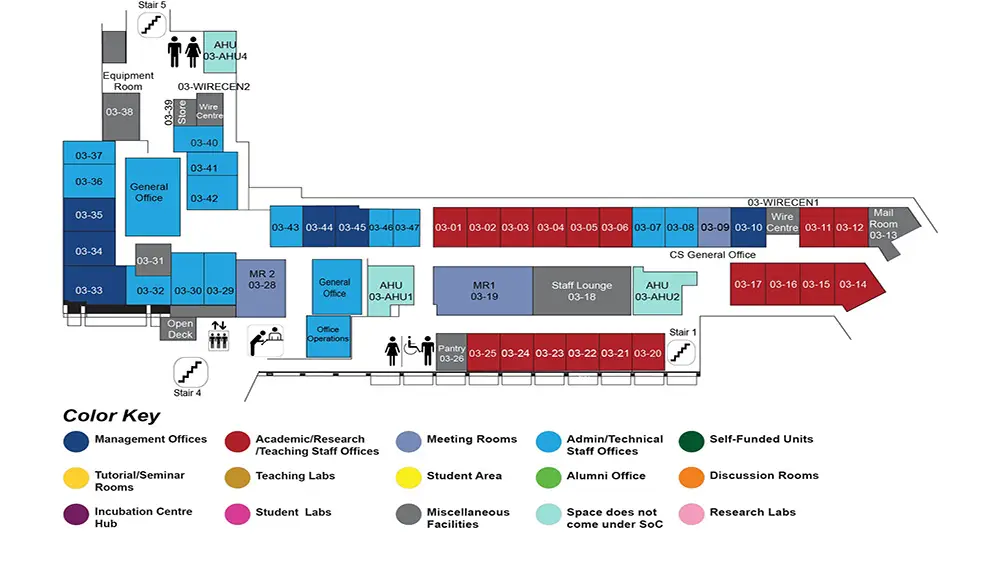
COM1 Level 3
MR1, COM1-03-19
Abstract:
The human brain has a remarkable ability to generalize across a wide variety of tasks and adapt to new situations. Replicating such an ability is a major challenge in artificial intelligence (AI). Furthermore, understanding how different brain regions communicate to perform complex decision-making tasks is a fundamental challenge in neuroscience. Although substantial progress has been made in mapping brain regions and their functions, we still lack a detailed understanding of the underlying neural computations and how these regions interact causally during cognitive processes. Motivated by the need to bridge this gap, we aim to develop more accurate models of neural connectivity that incorporate causality and explore how this knowledge can inspire the creation of brain-like AI systems.
In this thesis, we investigate the causal relationships and connectivity between neurons and brain regions to develop brain-inspired decision-making models. Current methods for detecting neural connectivity often face challenges in identifying causality and dealing with noisy or incomplete neural data. To overcome these limitations, we integrate causal discovery techniques to enhance the detection of neural connectivity at both local and inter-regional levels. Additionally, we design modular mixed architecture recurrent neural networks (RNNs) that incorporate brain-like connectivity patterns, such as bump attractors, to replicate neural activity in the dorsolateral prefrontal cortex (DLPFC) and frontal eye fields (FEF). These models are tested on a decision-making task, the "Monkey Banana problem", and demonstrate significant improvements in performance compared to traditional models.
The results provide new insights into the dynamics of brain region communication and contribute to the development of flexible, scalable AI systems that emulate human-like decision-making processes. Through this interdisciplinary approach, we aim to advance both computational neuroscience and AI by creating systems capable of tackling complex, real-world tasks in a manner similar to the human brain.