

Cohort Learning for Effective and Interpretable Healthcare Analytics
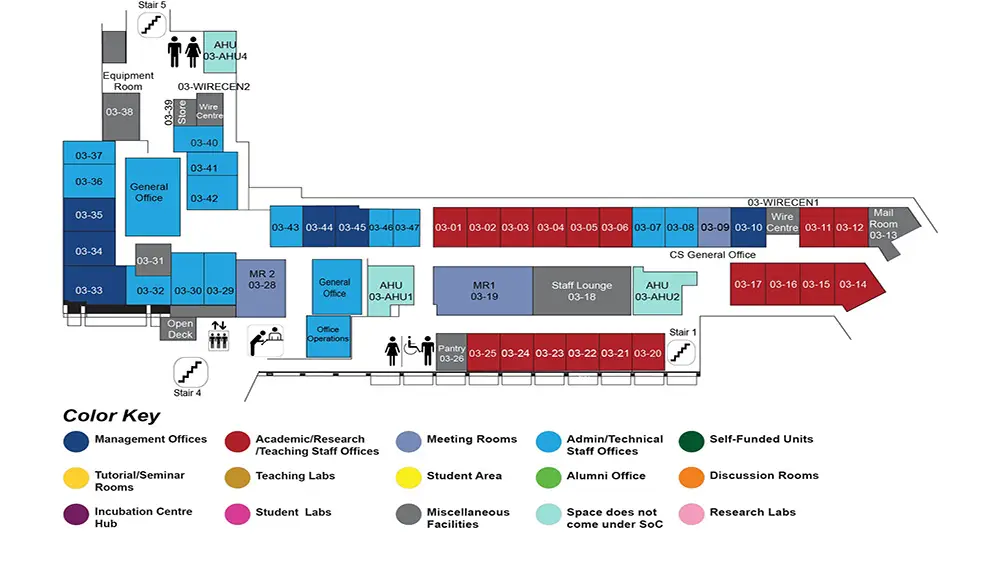
COM1 Level 3
MR1, COM1-03-19
Abstract:
The growing volume of electronic health record (EHR) data necessitates effective analytics to extract meaningful insights. Traditional manual methods are labor-intensive, while deep learning approaches face challenges due to EHR data’s unique characteristics and specific requirements for analytics. Most deep learning-based studies focus on individual patient data, which is often inherently incomplete. My thesis introduces cohort learning, a novel approach that groups patients with shared medical conditions or experiences. I propose a systematic cohort learning framework with three key steps: discovery, representation, and exploitation. First, cohorts are identified using feature-specific cohort definitions that aid interpretability and sample retrieval. Next, detailed patient representations are learned from multiple perspectives. Finally, cohorts are adaptively exploited based on individual patient conditions. To optimize this process, I address challenges at each stage.
A major hurdle in cohort discovery is the impracticality of exploring all possible definitions due to computational inefficiency. My first study tackles this by uncovering critical feature-level and time-level interactions in EHR data. I develop ELDA-Net, a healthcare analytics model that detects abnormal feature patterns, providing data-driven insights to guide cohort definition exploration.
Expanding on this, my second study introduces CohortNet, an automated framework for data-driven cohort learning. It discovers, represents, and utilizes cohort definitions by leveraging the learned feature interactions in EHR data, enabling efficient exploration of medically meaningful cohorts. Unlike conventional models relying solely on individual data, CohortNet identifies relevant cohorts and learns comprehensive representations from a broader perspective.
Beyond data-driven methods, medical study-driven cohorts leverage medical research and clinical context for cohort definition. My third study presents CosCoa, a general model integrating medically contextualized cohorts into backbone models for holistic patient representation. CosCoa can model both global cohort importance and local cohort importance that respectively reflect the overall effectiveness of given cohorts and their relevance to individual patients.
Extensive experiments validate the effectiveness of both data-driven and study-driven cohort learning, demonstrating improved prediction performance and interpretability. This work advances EHR analytics by enabling more reliable patient representations, supporting medical research, and enhancing clinical decision-making. By integrating cohort learning, my thesis bridges gaps in traditional and deep learning approaches, offering a scalable, interpretable, and medically meaningful solution for modern healthcare analytics.