

Deep Generative Models for Human Robot Interaction
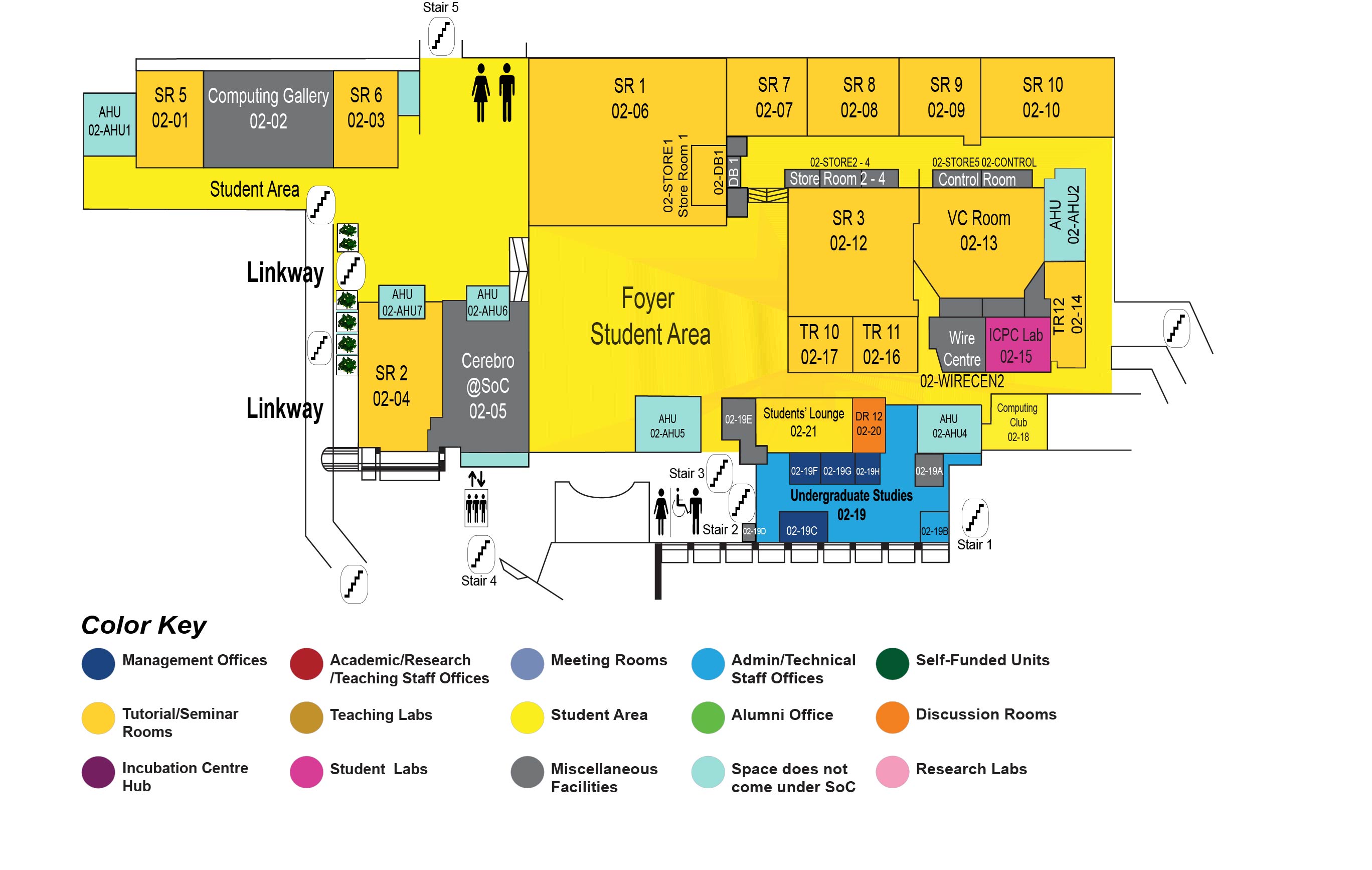
COM1 Level 2
SR7, COM1-02-07
Abstract:
Intelligent robots are increasingly used to assist and interact with humans. In these settings, robots have to handle multiple challenges ranging from high-dimensional observations to the complexity of human behavior. As a result, traditional hand-engineered methods have difficulties scaling to complex human-robot interaction tasks. Recently, deep generative models (DGMs) have shown promising capabilities in capturing high-dimensional and complex distributions. In this thesis, we propose novel DGMs and methodologies in three key areas of human-robot interaction: human-robot communication, perspective-taking, and imitation learning.
In the first part of the thesis, we introduce MIRROR for human-robot communication. MIRROR quickly learns human models from demonstrations and utilizes these models for communication planning in assistive shared-control environments. Inspired by social projection theory, which suggests that humans use self-models to understand others, MIRROR leverages self-models learned through multi-modal state space models and reinforcement learning to enhance human modeling. Experiments with simulated humans demonstrate that this approach facilitates rapid learning and yields more robust models than existing behavioral cloning and state-of-the-art imitation learning methods. A human-subject study in assistive driving illustrates that MIRROR can handle complex domains with high-dimensional observations and intricate world physics, effectively improving safety in adverse weather conditions.
However, MIRROR assumes complete environmental observation by the robot. The second part of the thesis tackles perception and conceptual perspective-taking in partially observable environments. Perspective-taking is the task of adopting the viewpoint of another agent. Here, we propose LEAPT—a decomposed multi-modal latent state space model capable of generating and augmenting fictitious observations/emissions. By optimizing the ELBO derived from this probabilistic graphical model, LEAPT learns to model uncertainty in latent spaces, thereby improving predictions of human observations and beliefs. Our model significantly outperforms existing baselines on three partially-observable human-robot interaction tasks, effectively inferring both the visual observations accessible to humans and their internal beliefs.
Next, we explore complex human behavior modeling through imitation learning. Recently, diffusion models, which have the ability to model high-dimensional and multimodal distributions, have shown impressive performance on imitation learning tasks. These models learn to shape a policy by diffusing actions (or states) from standard Gaussian noise. However, the target policy to be learned is often significantly different from Gaussian, and this mismatch can result in poor performance. We hypothesize that initiating from a more informative source than Gaussian enables diffusion methods to mitigate the above limitations. We leverage the stochastic interpolants framework to bridge arbitrary policies. Results from both simulation tasks and real-world tasks show significant improvements over standard diffusion-based methods.