

Issues of Trust in Computing and Online Communities
Dr Zhai Yingda, Assistant Professor, School of Computing
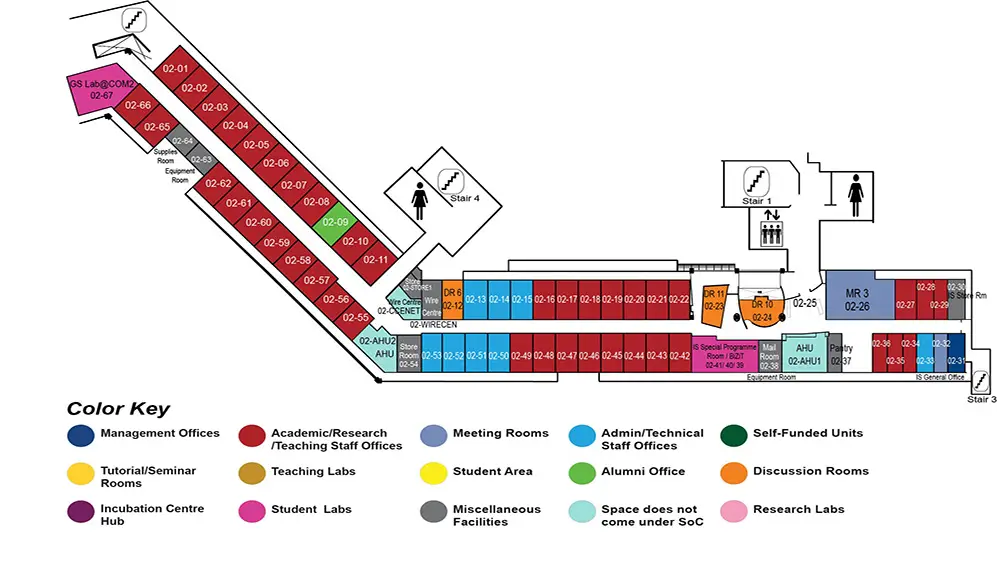
COM2 Level 2
MR3, COM2-02-26
Abstract:
Trust is a fundamental element that plays a crucial role in various domains, including both computer science and information systems. This thesis is an interdisciplinary study that explores the common theme of leveraging trust to enhance performance and efficiency in social commerce platforms as well as distributed systems.
In study 1, we design a consensus protocol for permissioned blockchain networks. Blockchain systems require a strong form of fault tolerance, the Byzantine Fault Tolerance (or BFT for short). BFT consensus is known to be inefficient and slow for 2 reasons: 1) BFT protocols are usually complex by design. They are hard to implement and harder to verify; 2) BFT protocols use public key cryptographic primitives, making those blockchain systems built on top of them even more inefficient. We reexamine the system components of various BFT protocols and we demonstrate that by extracting the trust components from the consensus protocol level and relocating them into the network, we are able to drastically reduce the cryptographic and communication overhead of a BFT consensus and simplify the overall protocol design. Leveraging a novel trust component that we develop, we design a new BFT protocol NOAH, with state-of-the-art protocol performance.
In study 2, we investigate how trust impacts platform performance in social commerce platforms. On these platforms, trust is formed between agents and users based on shared tastes, expertise, and the agent’s inclination to act for the user’s benefit. This trust leads to personal attachments and quality connections within the platform’s network, resulting in increased sales performance and user retention. Trust is seen as a key factor in maximizing platform effectiveness in generating transactions. In the long run, platforms should prioritize agents with higher levels of expertise and goodwill to build trust and strengthen ties with users. The study suggests that social commerce platforms should invest in incentive or training programs for agents to enhance their trust and bonding with users.
This thesis emphasizes the significance of trust in enhancing performance and efficiency across different domains. It highlights that by creatively abstracting a set of assumptions and building dependencies on top, systems (be it autonomous computing machine based systems as in study 1, or social-economic systems as in study 2) can add to their overall effectiveness. We hope this thesis may contribute to providing insights for such abstractions to practitioners and researchers across diverse fields.